Table of Contents
- U.S. Grid Modernization: A Catalyst for Silicon Steel Demand
- Domestic Supply Shortfalls: Why the U.S. Needs Global Partners
- High-Grade CRGO: Technical Must-Haves for UHV and Data Center Transformers
- Core Advantages and Service Capabilities of Global Silicon Steel Enterprises
- Future Development Strategies for Silicon Steel Enterprises in the Global Market
1. U.S. Grid Modernization: A Catalyst for Silicon Steel Demand
The U.S. power grid is at a critical crossroads. Aging infrastructure, rising electricity demand, and the shift to renewable energy have made grid modernization a top priority. Without upgrades, the grid faces frequent blackouts and cannot support the integration of new energy sources.
1.1 The $750 Billion Grid Upgrade Plan
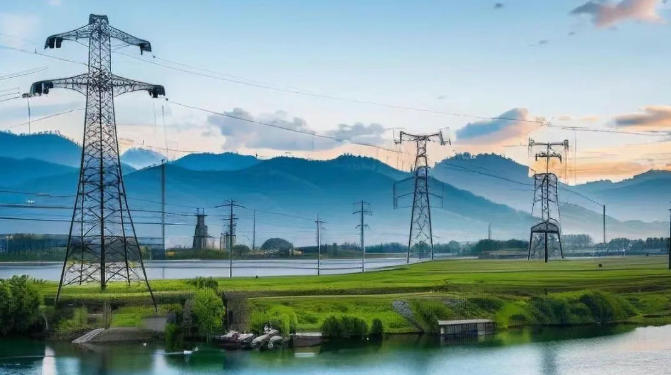
In 2026, the U.S. Federal Energy Regulatory Commission (FERC) approved a $750 billion grid expansion plan. Led by three major U.S. grid organizations—the North American Electric Reliability Corporation (NAERC), the Western Electricity Coordinating Council (WECC), and the Electric Reliability Council of Texas (ERCOT)—this is the largest grid project in U.S. history.The plan focuses on building 765kV Ultra-High Voltage (UHV) lines, with a total length of 10,000 miles—four times the length of the current UHV grid. These lines will connect energy-rich regions in the U.S. heartland to major cities on the East and West Coasts, enabling efficient cross-regional energy distribution.
1.2 AI Power Corridors: A New Source of Demand
In addition to traditional grid upgrades, Texas is launching a $10 billion “AI Power Corridor” project. This initiative aims to support the rapid growth of AI data centers, which require continuous, high-density power supply.Tech giants like Amazon, Google, and Microsoft are expanding their data center footprint in Texas. Each data center needs dedicated transformers to meet its energy needs, a trend that further increases demand for core transformer materials.
1.3 Silicon Steel: The Core Backbone of Transformers
Transformers are the core equipment for both grid modernization and data center operations, and Grain-Oriented Silicon Steel (CRGO) is the key component of every transformer. This material directly affects a transformer’s efficiency, durability, and energy loss levels.Industry experts estimate that one 765kV UHV transformer requires 50 to 80 tons of CRGO. The $750 billion grid project will add 800 to 1,000 new UHV transformers, creating demand for 40,000 to 80,000 tons of high-grade CRGO alone.When including transformers for data centers and those needed to replace old grid equipment, U.S. annual CRGO demand will reach 120,000 to 150,000 tons by 2030—an increase of 60% from current levels. This presents a huge market opportunity for global silicon steel suppliers.
2. Domestic Supply Shortfalls: Why the U.S. Needs Global Partners
U.S. silicon steel demand is outpacing domestic supply. This gap not only slows down grid modernization but also creates a need for reliable global partners.
2.1 The Decline of U.S. Transformer Manufacturing
Over the past few decades, most U.S. power equipment manufacturing has moved overseas, leaving only core R&D and final assembly in the country. This has led to a severe shortage of domestic transformer production capacity.Currently, 80% of transformers used in the U.S. are imported, with domestic production meeting only 20% of demand. There is almost no local capacity to produce UHV transformers.
2.2 Long Lead Times for Transformers
According to data from the Energy Power Devices Manufacturers Association (EPMI), only a handful of U.S. companies—such as General Electric (GE) and Westinghouse—can produce large transformers. Their capacity is limited, and production cycles are long.As a result, transformer lead times have increased from 50 weeks to over 127 weeks, with some urgent projects facing waits of up to 30 months—seriously delaying grid upgrade progress.
2.3 Severe Shortage of Domestic CRGO
The shortage of CRGO is even more acute. Currently, only AK Steel, a subsidiary of U.S. Steel, produces CRGO in the U.S.—and it only makes mid-to-low grade products, with an annual capacity of just 30,000 to 40,000 tons.This capacity is far from meeting the needs of UHV transformers and data center transformers. The U.S. imports over 90% of its CRGO, mainly from Japan and Germany. However, these imported products have long lead times and volatile prices, further worsening the shortage.
2.4 The Widening Supply-Demand Gap
The U.S. grid is also aging rapidly. FERC data shows that the average age of grid equipment exceeds 40 years, and transformers have an average lifespan of 35 years. Over 38% of transformers are past their useful life.Replacing these old transformers will further increase CRGO demand. Meanwhile, manufacturing reshoring and AI industry growth are driving sustained growth in electricity demand.Industry analysis predicts that U.S. transformer demand will reach 12,000 MVA in 2026, while domestic supply will only be 8,400 MVA—a 30% gap. CRGO demand will hit 120,000 tons, with domestic supply covering just 35,000 tons—a 70% shortfall.Expanding domestic CRGO production in the U.S. faces numerous challenges, including the need for advanced technology, huge investments, and skilled workers—all of which are currently in short supply. This means the U.S. must rely on global suppliers to fill the gap.
3. High-Grade CRGO: Technical Must-Haves for UHV and Data Center Transformers
The core of the $750 billion grid modernization project is the construction of 765kV UHV lines. These transformers operate in harsh environments and require high-grade CRGO to meet strict technical standards.
3.1 Core Technical Characteristics of UHV Transformers
UHV transformers operate continuously at high voltage and capacity, requiring CRGO with four core characteristics:First, high magnetic permeability. Magnetic permeability directly determines a transformer’s size and efficiency. CRGO with a magnetic permeability above 1.90 Tesla can increase transformer capacity without increasing size, while reducing energy loss.Second, low no-load loss. UHV transformers run 24/7, and no-load loss is one of the main sources of energy waste. High-grade CRGO must have no-load loss below 0.8 W/kg to meet energy conservation goals.Third, high mechanical strength. Transformers generate strong electromagnetic forces during operation. CRGO must have sufficient mechanical strength to resist these forces and avoid deformation or damage.Fourth, high voltage insulation. In UHV environments, CRGO coatings must have good insulation performance to prevent high-voltage breakdown and ensure safe, stable transformer operation.
3.2 Unique Requirements for Data Center Transformers
Data center transformers have special technical requirements. They must handle high-density, 24/7 power supply with frequent load fluctuations. Therefore, the CRGO they use must maintain stable magnetic properties during load changes to minimize energy loss.In addition, data centers have limited space and strict noise requirements. High-grade CRGO can effectively reduce transformer size and operating noise, making it perfectly suitable for data center installation environments.
3.3 Technical Barriers to High-Grade CRGO
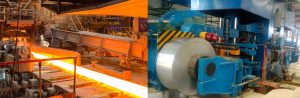
Only a few enterprises worldwide can produce high-grade CRGO suitable for UHV transformers. The production process is complex, covering key steps such as hot rolling, cold rolling, annealing, and coating.Each step requires precise control. For example, the annealing process requires strict control of temperature, atmosphere, and cooling rate to form the ideal grain orientation. Coating technology also directly affects CRGO’s insulation performance and service life.Meeting these technical standards is the core threshold for silicon steel suppliers to enter the high-value U.S. market. Suppliers must have large-scale production capacity for high-grade CRGO to provide reliable products for the U.S. market.
4. Core Advantages and Service Capabilities of Global Silicon Steel Enterprises
The U.S. CRGO shortage creates a unique opportunity for global suppliers. Silicon steel enterprises with core technologies and production capabilities can effectively meet U.S. market needs.
4.1 Technological Strength to Support Market Demand
Leading global silicon steel enterprises have broken the technical monopoly. They can produce high-grade CRGO with a magnetic permeability exceeding 1.95 Tesla and no-load loss below 0.75 W/kg—all technical indicators meet or exceed the requirements for U.S. UHV and data center transformers.These enterprises continuously optimize production processes to ensure stable product quality. Most have obtained international quality certifications and gained the trust of global transformer manufacturers.
4.2 Production Capacity and Supply Chain Advantages
Backed by a sound industrial foundation, high-quality global silicon steel enterprises have sufficient production capacity reserves. Their high-grade CRGO production capacity can effectively cover the U.S. market gap.At the same time, these enterprises have a complete supply chain system from raw material procurement to product delivery. They can quickly respond to customer needs, flexibly adjust production specifications and output, and adapt to market changes.
4.3 Efficient Delivery and Cost Advantages
Long lead times are a major pain point for U.S. transformer manufacturers. High-quality global silicon steel suppliers can deliver CRGO in just 4 to 8 weeks—much faster than the 12 to 16 weeks from U.S. and European suppliers. This helps significantly shorten grid project timelines.In addition, relying on efficient production processes and a complete industrial chain, high-quality silicon steel products have certain cost advantages. This allows U.S. buyers to obtain high-quality materials while controlling costs.
4.4 Comprehensive Service Guarantees
Enterprises focusing on CRGO for UHV and large-capacity transformers offer products with core advantages such as high magnetic permeability, low loss, high mechanical strength, and high insulation stability—perfectly suitable for U.S. grid and data center needs.Most enterprises can provide customized solutions based on specific customer needs. They have established strict quality control systems, using advanced equipment to inspect the entire process from raw material entry to product delivery, ensuring quality compliance. They also offer comprehensive technical support and after-sales service.
5. Future Development Strategies for Silicon Steel Enterprises in the Global Market
The U.S. $750 billion grid modernization project marks the start of a long-term growth phase for high-grade CRGO demand. For global silicon steel enterprises, this is a crucial opportunity to expand globally and consolidate their market position.
5.1 Prioritize R&D for High-End Products
As grid modernization and AI industry development accelerate, technical requirements for silicon steel will continue to rise. Low-loss, high-magnetic-permeability, and ultra-thin gauge oriented silicon steel will become the mainstream market demand.Enterprises need to increase R&D investment, focus on breaking through core technologies such as ultra-thin oriented silicon steel and nano-coated silicon steel, enhance product added value, and maintain competitiveness in the global market.
5.2 Optimize Global Supply Chain Layout
To effectively serve the U.S. market, silicon steel enterprises should strengthen cooperation with local U.S. transformer manufacturers and logistics companies. Establishing localized supply chain nodes will shorten lead times, reduce logistics costs, and improve customer satisfaction.At the same time, enterprises should expand into other global markets to diversify market risks, build a diversified customer base, and enhance risk resistance capabilities.
5.3 Build Strong Brands and Cooperative Relationships
A strong global brand is key to long-term enterprise development. Silicon steel enterprises should position themselves as “reliable, efficient, and technologically advanced” partners and strengthen brand promotion.Establish long-term, stable cooperative relationships with downstream transformer manufacturers and grid operators, deeply integrate into the market, and achieve mutual benefit, win-win results, and coordinated industrial development.The U.S. grid modernization project is a major turning point for the global energy industry, providing broad market space for global silicon steel enterprises. If you have relevant needs, we can develop customized silicon steel material solutions based on actual scenarios.