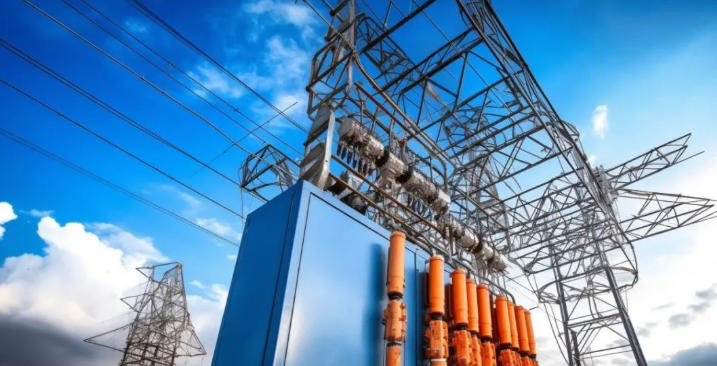
The world is entering a prolonged phase where power transformer supply simply can’t keep up with demand. This isn’t a short-term demand spike. Instead, it’s a full-blown capacity, delivery, and labor crunch. Grid upgrades, generation growth, and surging data center loads are all falling behind schedule because of it.
According to the Zhuifeng Trading Desk, analyst Pierre Lau recently noted, “We’re bullish on the global power transformer sector. We expect supply shortages to persist at least through 2029.” That call rests on a set of hard-nosed supply-demand math. Even with major manufacturers expanding capacity, the deficit will keep widening over the next three years.
For CRGO steel suppliers and transformer manufacturers alike, this signals a critical moment. The materials that make modern grids possible—especially grain-oriented electrical steel—are caught in the same supply crunch.
The Deficit That Refuses to Close
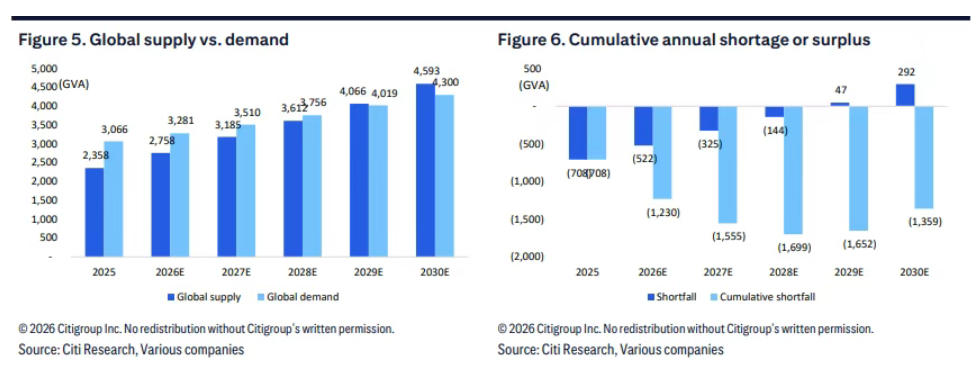
Projections for high-voltage (>100kV) transformers show supply falling roughly 30% short of demand in 2025. From 2026 to 2028, annual supply still lags demand. The cumulative shortfall climbs from 708 GVA in 2025 to a peak of around 1,699 GVA by 2028.
What does this mean for the industry? Tight supply leads to longer lead times, rising prices, and orders concentrating with players that can actually deliver.
The stock-picking approach behind this analysis is straightforward. Companies with the clearest visibility on orders and capacity expansion get Buy ratings. Meanwhile, names with equally strong fundamentals but richer valuations receive a neutral nod.
Shortfall Peaks in 2028 – But No Quick Fix in Sight
The shortfall breaks down into two layers. The annual deficit shrinks gradually, but the cumulative gap keeps growing through 2028.
2025: Global supply ~2,358.5 GVA vs. demand ~3,066.0 GVA, an annual deficit of ~707.5 GVA (roughly a 30% gap)
2026–2028: Annual deficits come in at ~522.2, 325.2, and 143.9 GVA respectively
2029 onward: Annual supply edges slightly above demand (a ~47.2 GVA surplus in 2029)
Still, the cumulative backlog won’t fully clear until after 2030.
One easily overlooked detail: top-tier concentration is slipping. The top ten players’ share of capacity will likely drop from 79.4% in 2025 to 72.6% by 2030. Expansion is happening, but the “effective” new supply is fragmented. Moreover, the timing is anything but uniform.
Why Capacity Expansions Won’t Fix the Shortfall
We shouldn’t dismiss the scale of capacity additions. Global HV transformer capacity will likely grow 53% between 2025 and 2028. Year-over-year increases come in at +17%, +15%, and +13% from 2026 through 2028. By 2030, total capacity should rise roughly 95% from current levels.
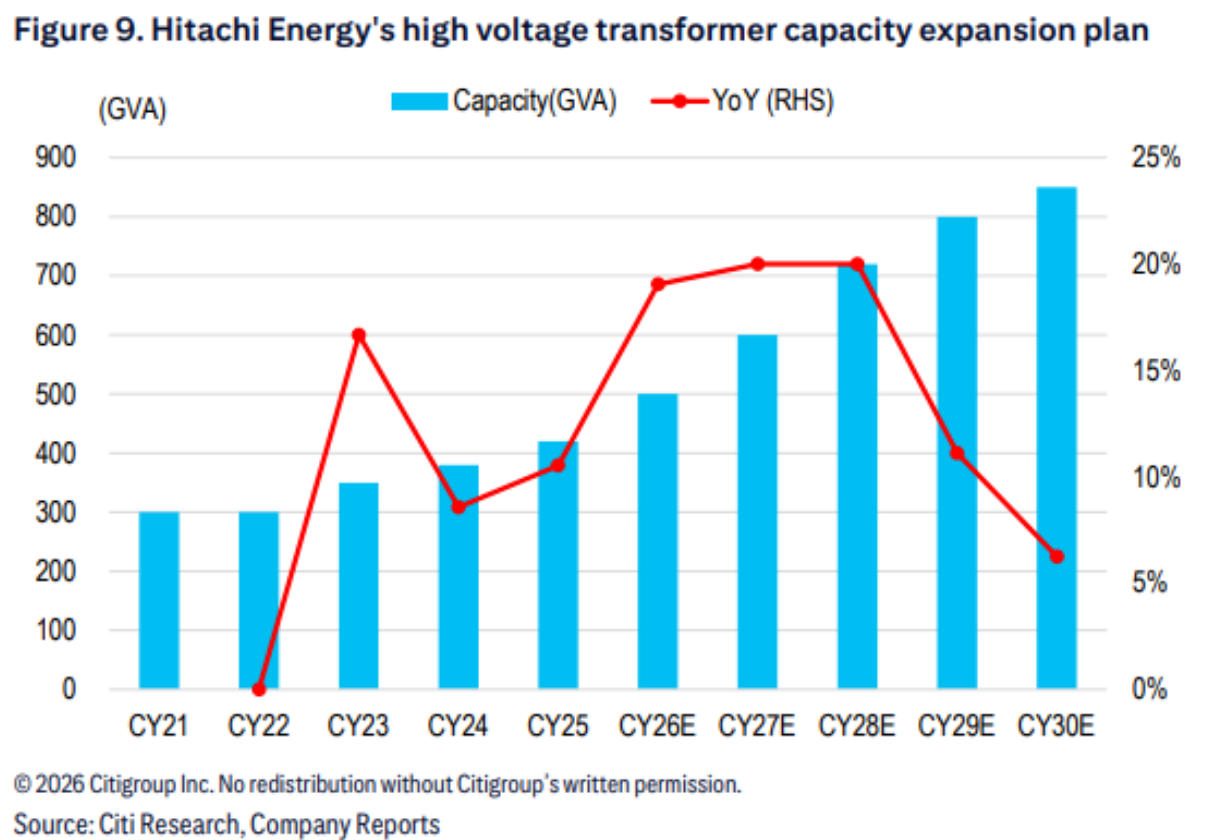
So what’s the problem? Two bottlenecks act as “slow-moving variables.”
Skilled Labor Shortages
This is a key constraint that will take years to resolve. Adding production lines doesn’t instantly translate to stable output. Why? Because training timelines eat into the benefits of capacity expansion.
Material and Component Tightness
Industry consultants estimate high U.S. import reliance. Wood Mackenzie figures show imports account for roughly 80% of U.S. power transformer supply. For distribution transformers, that number sits around 50%. This makes trade policy and tariffs a direct line to costs and lead times.
Domestically, U.S. GOES (grain-oriented electrical steel) supply is highly concentrated. Only one producer—AK Steel—holds the market. Copper windings also risk becoming a bottleneck. Add a 50% U.S. tariff on copper, and friction costs won’t fade quickly.
The math on capex is equally harsh. Building new HV (>220kV) transformer capacity in the U.S. runs about $450–500 million per GVA of capacity. Japan, South Korea, Europe, and China all come in with lower unit capex. Expansion isn’t off the table. It’s just slower and pricier.
Two Engines Powering Demand
Demand growth breaks down into two categories: traditional backbone investment and new load sources.
Grid and Generation Spending
IEA data shows developed economies and China together accounted for roughly 80% of global grid investment in 2024. That’s around $100 billion in the U.S. and $60 billion in the EU. Meanwhile, BloombergNEF estimates that under a net-zero scenario, global grid investment would need to grow at roughly 12% annually through 2030, hitting $777 billion.
Data Centers Are Bending the Load Curve
U.S. research teams have revised hyperscaler capex upward. The previous 18% CAGR has jumped to 28% over 2025–2030. If those assumptions hold, the transformer shortage stops being a simple “wait for capacity to catch up” story.
At the order-book level, analysis of Korean transformer manufacturers offers a clear picture. U.S. power transformer demand breaks down as:
Grid: 40–45%
Power plants: 30–35%
Data centers: 20–25%
This explains why the industry is getting increasingly sensitive to AI and data center capex. It’s already embedded in the demand structure.
Prices Are Trending Upward – and Staying There
Tight supply shows up first in pricing and lead times. Wood Mackenzie data reveals significant U.S. transformer unit cost increases since 2019:
Generation step-up transformers: up roughly 45%
Power transformers: up about 77%
Distribution transformers: up between 78% and 95% (depending on specs)
A broader price signal confirms the trend. The FRED series for U.S. power and distribution transformer PPI hit 366.6 in January 2026. That’s a 6.2% year-over-year increase. We expect upward price momentum to continue. The core reason? The shortage isn’t over.
What to Watch Next
The logic chain is straightforward. Shortage drives price. Price drives profits. Profits drive valuation.
Several key variables deserve attention:
Data center capex and power load revisions – this is the demand-side wild card that could extend the shortage cycle
Tariffs and import dependency – the U.S. leans heavily on imports. Tariffs don’t just raise costs; they also stretch lead times
Capacity expansions aren’t done until they’re done – building lines, ramping production, and training skilled workers all keep supply-side flexibility constrained
Middle East conflicts have limited impact on global demand. The region accounts for only about 6% of the global transformer market. In other words, the real drivers remain grid investment and data center growth in North America, Europe, and Asia-Pacific.
Secure Your CRGO Steel Supply Without the Wait
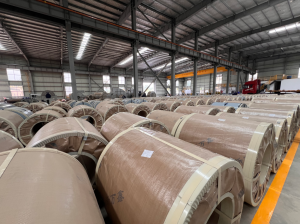
For transformer manufacturers navigating these capacity bottlenecks and material constraints, the pressure is on to secure reliable supply chains. CRGO steel sits at the heart of every transformer core—and right now, it’s one of the tightest links in the chain.
That’s where MOOPEC comes in.
We specialize in high-quality grain-oriented electrical steel with:
Low minimum order quantities – ideal for small-batch production and R&D
Flexible customizations – cut to your exact width, thickness, and coating specs
Responsive supply chain – designed to help you keep production moving even when the market is tight
Looking to lock in your CRGO supply without the wait? Reach out to the MOOPEC team to discuss your specs, timeline, and volume requirements.