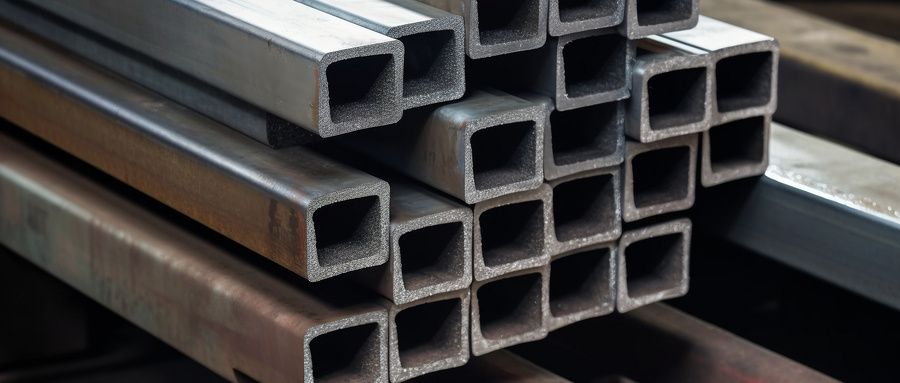
When we talk about the elite of engineering materials, carbon steel is undoubtedly an indispensable choice. Engineers respect it for its excellent performance, unique structural composition and wide range of applications. Moreover, it delivers this combination at a remarkably low cost. Now let’s take a closer look at what makes carbon steel so excellent.
Performance Characteristics of Carbon Steel
Strength and durability
Carbon steel is an alloy with iron and carbon as its main components, and its unique molecular structure gives it excellent strength and durability. As a result, carbon steel performs well in applications subject to high loads and pressures, such as mechanical engineering and construction.
Plasticity and machinability
Although carbon steel has excellent hardness and strength, it still retains good plasticity and machinability. Thanks to this balance, it can be molded easily into various forms to meet different needs. For this reason, it remains one of the most valuable materials in manufacturing.
Relative corrosion resistance
Carbon steel does not match the corrosion resistance of stainless steel. However, under the right conditions, it still resists corrosion reasonably well. It is therefore an ideal choice for structures and components where cost matters most.
Weldability
In addition, carbon steel generally welds well, meaning it can be joined with other materials relatively easily. This property allows carbon steel to combine with other metals and create more complex, more powerful structures.
Cost effectiveness
Finally, carbon steel costs less and is easier to obtain than many other alloy steels. Consequently, it is used across all walks of life — especially in mass production.
Structural Composition of Carbon Steel
Carbon steel consists mainly of iron and carbon, and it usually contains small amounts of other elements such as manganese and silicon. In general, the carbon content lies between 0.2% and 2.1%. Importantly, this carbon content determines the hardness and strength of the steel — the higher the carbon, the harder and stronger the material.
Chemical Composition of Standard Spring and Tool Steels (DIN)
The table below lists the chemical composition of common carbon and alloy spring steels according to the German standard (Stahlbezeichnung = steel designation; Werkstoffnummer = material number).
| Stahlb ezeich nung | Stahlb ezeich nung | Masse nanteil e in % | Masse nanteil e in % | Masse nanteil e in % | Masse nanteil e in % | Masse nanteil e in % | Masse nanteil e in % | Masse nanteil e in % | Masse nanteil e in % | Masse nanteil e in % |
| Kurzname | Werkst off- numbe r | C | Si | Mn | P max. | S max. | Cr | Mo max. | V | Ni |
| C55S | 1.1204 | 0,52 bis 0,60 | 0,15 bis 0,35 | 0,60 bis 0,90 | 0,025 | 0,025 | max. 0,40 | 0,10 | – | max. 0,40 |
| C60S | 0.1211 | 0,57 bis 0,65 | 0,15 bis 0,35 | 0,60 bis 0,90 | 0,025 | 0,025 | max. 0,40 | 0,10 | – | max. 0,40 |
| C67S | 1.1231 | 0,65 bis 0,73 | 0,15 bis 0,35 | 0,60 bis 0,90 | 0,025 | 0,025 | max. 0,40 | 0,10 | – | max. 0,40 |
| C75S | 1.1248 | 0,70 bis 0,80 | 0,15 bis 0,35 | 0,60 bis 0,90 | 0,025 | 0,025 | max. 0,40 | 0,10 | – | max. 0,40 |
| C85S | 1.1269 | 0,80 bis 0,90 | 0,15 bis 0,35 | 0,40 bis 0,70 | 0,025 | 0,025 | max. 0,40 | 0,10 | – | max. 0,40 |
| C90S | 1.1217 | 0,85 bis 0,95 | 0,15 bis 0,35 | 0,40 bis 0,70 | 0,025 | 0,025 | max. 0,40 | 0,10 | – | max. 0,40 |
| C100S | 1.1274 | 0,95 bis 1,05 | 0,15 bis 0,35 | 0,30 bis 0,60 | 0,025 | 0,025 | max. 0,40 | 0,10 | – | max. 0,40 |
| C125S | 1.1224 | 1,20 bis 1,30 | 0,15 bis 0,35 | 0,30 bis 0,60 | 0,025 | 0,025 | max. 0,40 | 0,10 | – | max. 0,40 |
| 48Si7 | 1.5021 | 0,45 bis 0,52 | 0,60 bis 2,00 | 0,50 bis 0,80 | 0,025 | 0,025 | max. 0,40 | 0,10 | – | max. 0,40 |
| 56Si7 | 1.5026 | 0,52 bis 0,60 | 0,60 bis 2,00 | 0,60 bis 0,90 | 0,025 | 0,025 | max. 0,40 | 0,10 | – | max. 0,40 |
| 51CrV4 | 1.8159 | 0,47 bis 0,55 | max. 0,40 | 0,70 bis 1,10 | 0,025 | 0,025 | 0,90 bis 1,20 | 0,10 | 0,10 bis 0,25 | max. 0,40 |
| 80CrV2 | 1.2235 | 0,75 bis 0,85 | 0,15 bis 0,35 | 0,30 bis 0,50 | 0,025 | 0,025 | 0,40 bis 0,60 | 0,10 | 0,15 bis 0,25 | max. 0,40 |
| 75Ni8 | 1.5634 | 0,72 bis 0,78 | 0,15 bis 0,35 | 0,30 bis 0,50 | 0,025 | 0,025 | < 0,15 | 0,10 | – | 1,80 bis 2,10 |
| 125Cr2 | 1.2002 | 1,20 bis 1,30 | 0,15 bis 0,35 | 0,25 bis 0,40 | 0,025 | 0,025 | 0,40 bis 0,60 | 0,10 | – | max. 0,40 |
| 102Cr6 | 1.2067 | 0,95 bis 1,10 | 0,15 bis 0,35 | 0,25 bis 0,40 | 0,025 | 0,025 | 1,30 bis 1,60 | 0,10 | – | max. 0,40 |
Note: Elements not listed in this table must not be intentionally added to the steel — except for finishing the melt — without the buyer’s consent. Manufacturers must take all reasonable precautions to prevent such elements from entering through scrap or other raw materials, because they would impair hardenability, mechanical properties and usability.
Hardness and Delivery Conditions
In addition to composition, the delivery condition determines the working hardness of each grade. Soft-annealed (+A) or soft-annealed and lightly skin-passed (+LC) material is measured in HRB, while quenched-and-tempered (+QT) material is measured in HRC.
| Stahlbezeichnung | Stahlbezeichnung | Lieferzustand | Lieferzustand |
| Kurzname | Werkstoff-number | weichgeglüht (+A) oder weichgeglüht und leicht nachgewalzt (+ LC) HRB c max. | vergütet b (+ QT) HRC c |
| C55S | 1.1204 | 90 | 34 bis 50,5 |
| C60S | 1.1211 | 91 | 35 bis 51,5 |
| C67S | 1.1231 | 92 | 38,5 bis 54 |
| C75S | 1.1248 | 93 | 38,5 bis 54 |
| C85S | 1.1269 | 94 | 38,5 bis 55 |
| C90S | 1.1217 | 94 | 38,5 bis 55 |
| C100S | 1.1274 | 95 | 38,5 bis 57 |
| C125S | 1.1224 | 97 | 38,5 bis 57 |
| 48Si7 | 1.5021 | 95 | 38,5 bis 50,5 |
| 56Si7 | 1.5026 | 96 | 38,5 bis 50,5 |
| 51CrV4 | 1.8159 | 94 | 38,5 bis 50,5 |
| 80CrV2 | 1.2235 | 95 | 38,5 bis 50,5 |
| 75Ni8 | 1.5634 | 93 | 38,5 bis 50,5 |
| 125Cr2 | 1.2002 | 97 | 42 bis 57 |
| 102Cr6 | 1.2067 | 97 | 42 bis 57 |
Notes: For thicknesses smaller than EN ISO 6508-1 allows, agree on the Rockwell hardness scale during inquiry and ordering. For products delivered in the quenched-and-tempered condition, a range of 5 HRC applies to hardness ranges ≤ 40 HRC, and a range of 4 HRC applies above 40 HRC. HRB = Rockwell hardness scale B; HRC = Rockwell hardness scale C.
Application Areas of Carbon Steel
Mechanical engineering
Carbon steel plays an important role in mechanical engineering, where it is used to manufacture machine parts, gears, bearings and more. Its strength and durability make it the material of choice for machine building.
Construction industry
Likewise, carbon steel is widely used in building structures, supports and frames. Once again, strength and durability make it an indispensable material in construction.
Automotive manufacturing
In automotive manufacturing, carbon steel goes into body structures, engine parts and chassis components. Its combination of strength and plasticity provides safety and durability for the car.
Tool manufacturing
Finally, carbon steel also serves in tool making. Its hardness and durability make it ideal for producing high-quality tools.
Conclusion
Carbon steel is highly regarded for its excellent properties, well-defined composition and wide range of applications. Its strength, durability, plasticity, machinability and cost effectiveness let it play a key role in many fields. As a true gem of engineering materials, carbon steel will continue to work wonders in technology and manufacturing — bringing more convenience and possibility to people’s lives.