
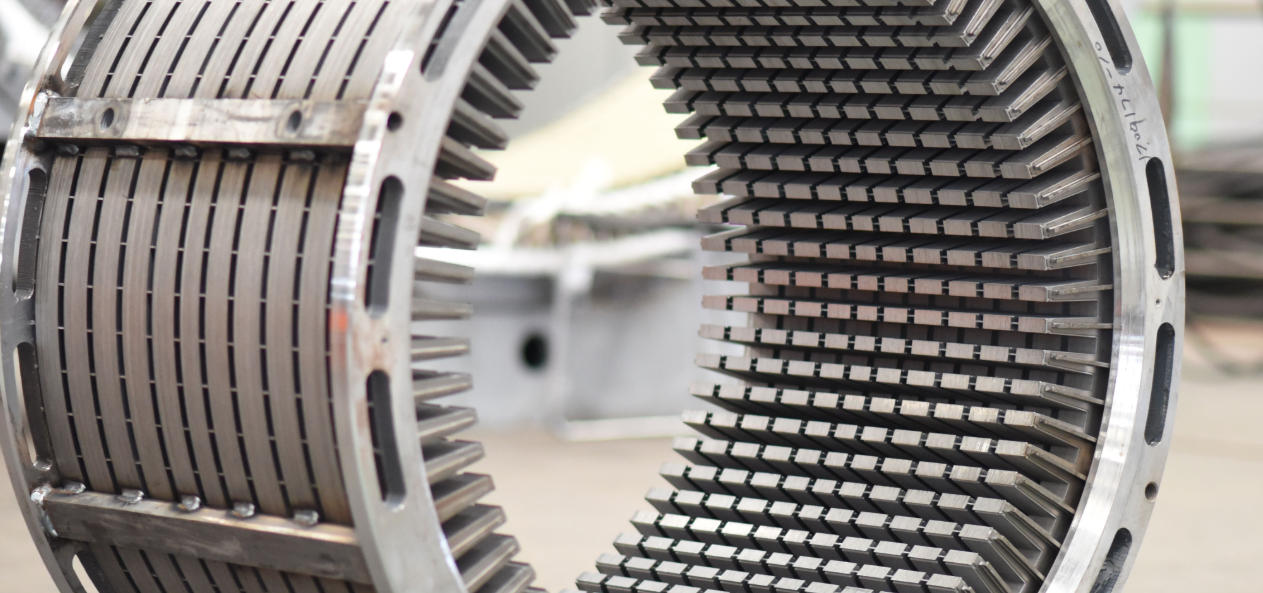
In modern power systems, transformers are essential equipment in both transmission and distribution networks — and at the heart of every transformer lies its core. The core not only carries the magnetic flux but also directly affects the transformer’s efficiency, energy loss, operational noise, and lifespan. With growing demands for energy savings, carbon reduction, and high-performance smart grids, the market is setting higher standards for the materials and structures used in transformer steel.
Currently, there are two primary core structures widely used in the industry: stacked cores and wound cores. Each has unique characteristics and is applied across different power ratings and operational scenarios. This article takes a deep dive into the structure, performance, applications, and market trends of these two core types, analyzing mainstream silicon steel grades to help industry professionals choose the most suitable core design for their needs.
Stacked Core: An In-Depth Look
Structural Features
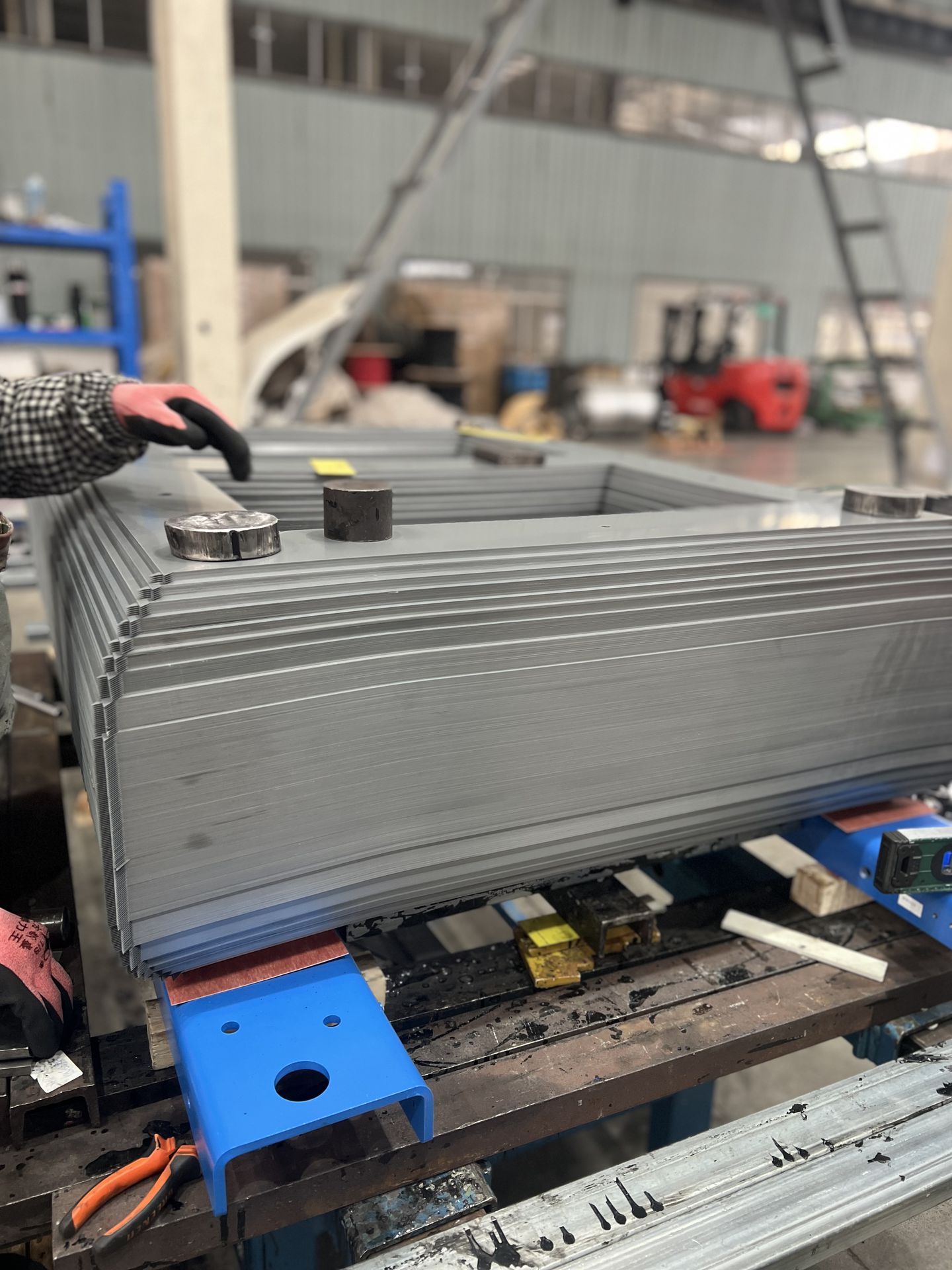
As the name suggests, a stacked core is built by layering multiple sheets of silicon steel, cut to precise dimensions, on top of one another. The overall shape resembles a half-elliptical football: the innermost laminations are the widest and longest, while the width gradually tapers upward — for example, from 100 mm at the bottom, reducing step by step to 80 mm, 60 mm, 50 mm, 40 mm, and finally 30 mm — forming a compact, elliptical structure.
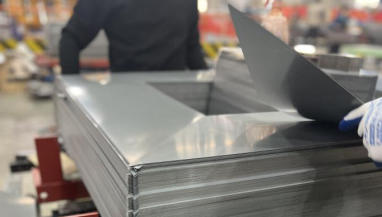
This design delivers balanced magnetic flux distribution and strong mechanical integrity, making it suitable for a wide range of load conditions.
Classifications and Subtypes
Stacked cores can be further classified by assembly method, structural form, material thickness and grade, and application scenario:
(1) By Assembly Method
Step-Lap Core
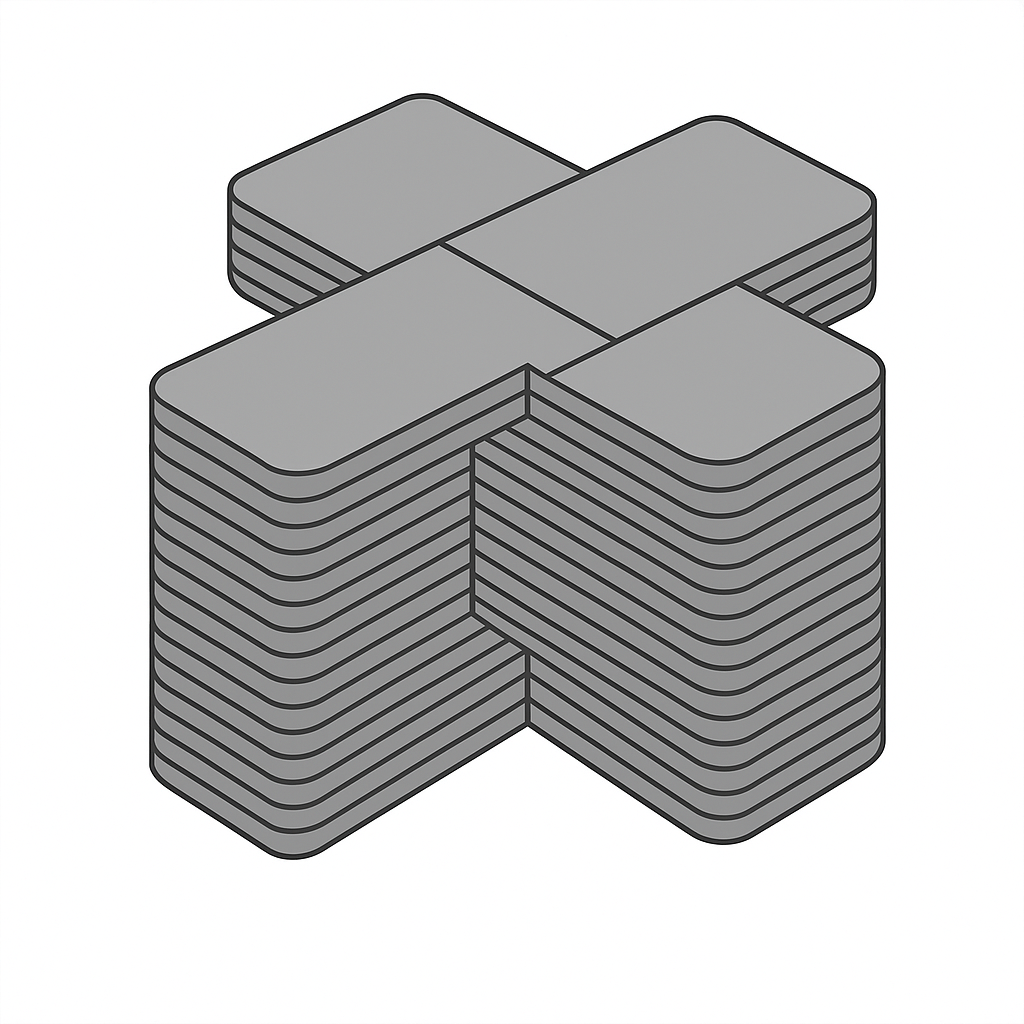
Laminations are overlapped in a staggered, step-lap arrangement, reducing air gaps, smoothing the magnetic path, and minimizing noise.
Typical grades: 0.23 mm B23G095; 0.27 mm B27G120.
Butt-Lap Core
Laminations are aligned perfectly in parallel, offering simple manufacturing and lower cost, but with slightly higher noise and losses.
Typical use: Standard distribution transformers.
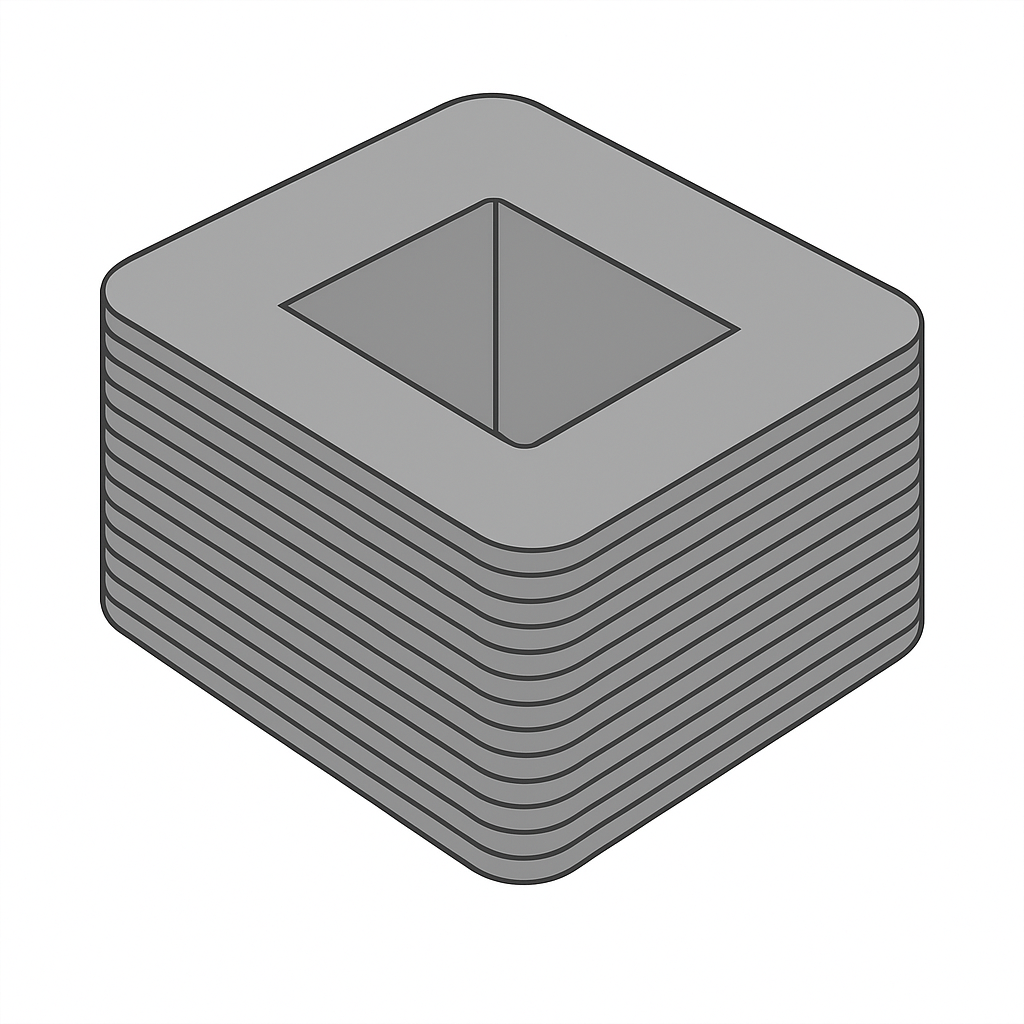
(2) By Structure
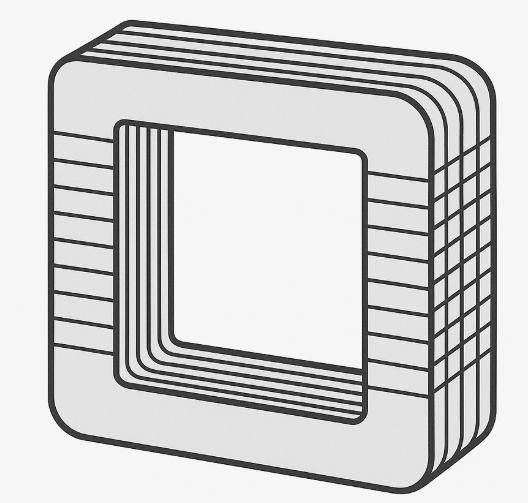
Single-Phase Stacked Core
Compact and commonly used for small-capacity single-phase transformers.
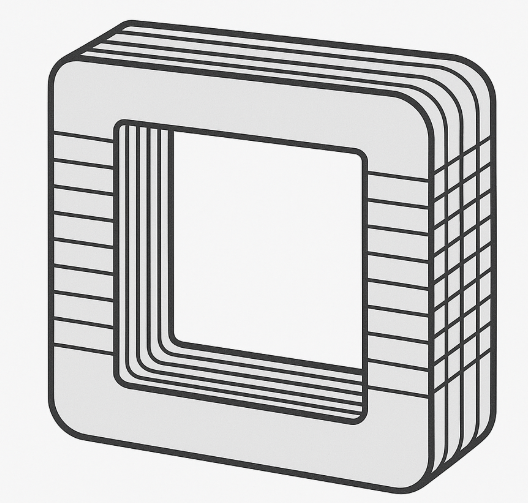
Three-Phase Stacked Core
Widely used in industrial and grid applications, especially for medium to large transformers.
(3) By Thickness and Performance
Thickness (mm) |
Typical Baosteel Grades
|
Features
|
Common Applications
|
| 0.18 | B18P065, B18P070 | Ultra-low loss, high flux density | UHV and ultra-efficient transformers |
| 0.23 | B23G095, B23G110 | High efficiency, energy-saving | High-efficiency power transformers |
| 0.27 | B27G120, B27G130 | Stable, general-purpose | Standard distribution transformers |
| 0.30 | B30G130, B30G140 | Balanced cost and performance | Medium/low-voltage systems |
| 0.35 | B35G135, B35G145 | Strong short-circuit resistance | Large industrial transformers |
(4) By Application
Standard Stacked Core
Cost-effective, ideal for general distribution needs.High-Flux Stacked Core
Uses high-flux materials like B23P095 or B27P110 for lower losses and higher efficiency — perfect for high-load or energy-saving applications.Laser-Scribed Stacked Core
Laser-scribing enhances magnetic performance, ideal for ultra-efficient power transformers.
Manufacturing Process
The stacked core manufacturing process is mature and includes:
Precision Cutting: Laminations are cut to design specifications.
Layered Stacking: Laminations are assembled in a progressively narrower sequence.
Annealing: High-temperature annealing relieves stress and enhances magnetic properties.
Insulation Coating: Coatings reduce interlaminar eddy current losses.
Performance Overview
Advantages
Smooth magnetic path with high operational efficiency
Strong mechanical strength and short-circuit resistance
Proven, reliable manufacturing process
Limitations
Longer production cycles and more labor-intensive
Slightly higher noise levels, less suitable for noise-sensitive areas
Typical Applications
Stacked cores are commonly used in:
High-capacity power transformers
High-voltage transmission transformers
Heavy-duty industrial distribution equipment
Wound Core: An In-Depth Look
Structural Features
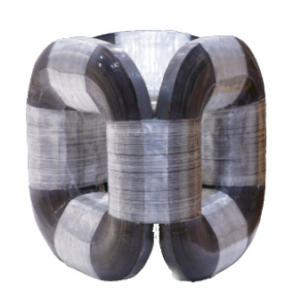
A wound core is made by continuously winding oriented silicon steel into a closed loop, followed by cutting, annealing, and shaping. The continuous magnetic path results in minimal air gaps, leading to lower core loss, higher efficiency, and exceptionally low noise, making it ideal for energy-efficient and low-noise transformers.
Classifications and Subtypes
(1) By Winding Type
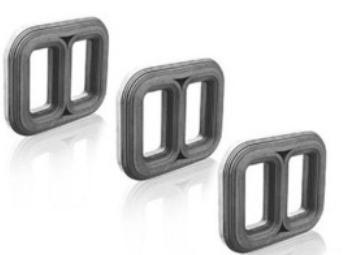
Single-Phase Wound Core
Compact, quiet, and efficient.
Applications: Household appliances, small distribution systems, control transformers.
Three-Phase Wound Core
Stable magnetic flux and quiet operation, commonly used in medium- and small-capacity systems.
Applications: Urban distribution networks, commercial buildings, power systems.
(2) By Material Performance
| Thickness (mm) | Typical Baosteel Grades | Features | Common Applications |
| 0.23 | B23R090, B23P095 | Extremely low loss, high efficiency | Small-capacity energy-efficient transformers |
| 0.27 | B27R095, B27P100 | Stable, versatile | Standard distribution transformers |
| 0.30 | B30P100, B30P105 | Balanced cost and performance | Industrial and commercial transformers |
| 0.35 | B35P125, B35P135 | High strength, short-circuit resistance | Specialized industrial scenarios |
(3) By Process Type
Continuous Wound Core
Automated winding ensures optimal continuity, lowest core loss, and high efficiency.Cut-and-Shape Wound Core
Suitable for customized and flexible designs.Segmented Wound Core
Combines continuity with modular construction for high-reliability projects.
(4) By Performance
Standard Energy-Saving Core: Balanced performance at lower costs.
High-Flux Wound Core: Enhanced efficiency for demanding applications.
Laser-Scribed Wound Core: Superior loss reduction, ideal for meeting strict EU and North American efficiency standards.
Manufacturing Process
Wound cores feature a high degree of automation:
Precision Winding: Accurate width and tension control.
Cutting and Shaping: Processed to exact design specifications.
Annealing: High-temperature stress relief for better performance.
Insulation: Optimized coating to reduce eddy losses.
Performance Overview
Continuous magnetic path for minimal losses
Extremely low noise, suitable for quiet environments
High consistency through automation
Better material utilization for cost efficiency
Typical Applications
Application Area | Key Requirements | Recommended Grades |
| Urban distribution | Energy-saving, low noise | B23R090, B27R095 |
| Commercial buildings | Quiet operation, aesthetic design | B23P095, B27P100 |
| enewable energy | High efficiency, durability | B23R085, B27P110 |
| Industrial equipment | High stability | B30P105, B35P125 |
Stacked Core vs. Wound Core: A Comparison
| Dimension | Stacked Core | Wound Core |
| Structure | Elliptical, layered laminations | Continuous, ring-shaped winding |
| Magnetic Path | Slight gaps present | Fully continuous |
| Core Loss | Relatively higher | Significantly lower |
| Noise | Medium to high | Very low |
| Manufacturing | Mature but labor-intensive | Highly automated |
| Application | High-capacity, high-voltage | Medium-capacity, energy-saving |
| Typical Grades | B23G120, B27G120, B30G140 | B23R090, B27R095, B30P105 |
Market Trends and Technological Developments
Material Advancements: Steel producers like Baosteel, JFE, and Posco are introducing ultra-low-loss, high-flux materials such as B18P065 and 23JG095.
Automation: Technologies like laser cutting, intelligent winding, and AI-driven design optimization are improving precision and efficiency.
Sustainability: Adoption of lead-free coatings and low-carbon processes is increasing to meet global environmental and energy regulations.
Why Choose MOOPEC
As a global leader in the transformer steel supply chain, MOOPEC delivers premium materials and turnkey solutions with advantages such as:
Extensive Grade Inventory
Full coverage from B18P065 and B23G120 to B27R095 and B35PG135.Fast Delivery & Flexible Batch Sizes
Small-batch prototyping and rapid sampling to shorten development cycles.End-to-End Supply Chain Integration
From master coils, precision slitting, cutting, and punching to packaging and international logistics — fully streamlined.Global Presence
Headquarters in Singapore with operational hubs in Shanghai, Wuhan, Dalian, and Shijiazhuang for seamless global delivery.Expert Technical Support
A team of PhD experts and seasoned engineers provides full lifecycle support, from material selection to production.
Both stacked and wound cores have their strengths: stacked cores excel in high-capacity, high-voltage, mechanically demanding settings, while wound cores deliver superior performance in energy-efficient, low-noise, and highly automated environments. When selecting a core, factors like capacity, operational environment, efficiency standards, budget, and lead time should all be considered.
No matter the choice, MOOPEC supports customers with high-quality materials, fast delivery, and professional service, enabling efficient, economical, and sustainable transformer solutions from design to production.



