Every new stamping die has to be proven before it runs production parts, and every tryout loop consumes material. The problem is that tryout needs a few hundred kilograms of the exact production grade, often months before the production coils exist. This guide explains how stampers and die makers can source small quantities of automotive steel for die tryout without compromising what the trial is meant to prove.
Small quantities of tryout steel can come from four routes: suitable material already in stock, sheet or blanks cut from a coil allocated to production, a dedicated mill order, or identified remaining stock with full traceability. Which route works depends on one question above all: does the material match the specification the die will see in production? Price and lead time come second.
Why tryout material is hard to buy
- Mills produce in coils of several tonnes and set minimum order quantities per grade, thickness, width and coating. A tryout may need a fraction of one coil.
- Tryout often starts before the series supply contract is placed, so the production mill route may not be fixed yet.
- Advanced high-strength and coated grades are produced in campaigns. Waiting for the next campaign can take longer than the tryout schedule allows.
- The quantity is uncertain. Nobody knows in advance how many correction loops the die will need.
The result is a familiar compromise: the die is tried out on whatever steel is available, and problems that the real grade would have revealed appear later, at buy-off or in the first production run.
Decide what the tryout must prove
Before asking for a quote, agree internally what the material has to represent. A soft-tool trial that checks part geometry can sometimes accept a near grade. A hard-tool tryout that validates springback, splits and thinning on a dual-phase steel cannot.
| Tryout purpose | What the material must match | Where flexibility may exist |
|---|---|---|
| Geometry and trim line check | Thickness, approximate strength level | Mill source, coating, sometimes grade (with engineering approval) |
| Formability and splits | Grade, thickness, n-value and r-value range, surface | Coil position, small dimensional differences |
| Springback compensation | Grade, thickness, yield and tensile range, ideally the production mill route | Very little |
| Weldability and joining trials | Grade, coating type and coating weight | Very little |
| Final buy-off / PPAP samples | The approved production specification, including mill if the customer specifies it | None without customer approval |
Four ways to source small quantities
| Route | How it works | Best for | Watch out for |
|---|---|---|---|
| Suitable stock | Sheet or coil already held that matches grade, thickness, coating and width | Fast trials on common grades | Confirm the certificate matches your standard, not just the grade name |
| Cut from an allocated coil | A coil bought for production is slit or cut to length, and part of it is set aside for tryout | Programs where the production grade is known | Plan the cut early so tryout and production come from the same heat |
| Dedicated mill order | A mill produces the grade to order | Special grades, unusual widths or new coatings | Mill minimum quantities and campaign lead times |
| Identified remaining stock | Remaining material from earlier orders, with heat number, condition and certificate intact | Small, urgent quantities | Only usable if identity, condition and documents are complete; unidentified remnants are not tryout material |
In practice, a supplier with visibility of stock across several customers and processing sites has more of the first and fourth options available. That is the main reason tryout material is easier to source through a service center than directly from a mill.
How much material to order
A simple estimate avoids both a second urgent order and a pallet of unused sheet:
- Blank mass = blank length × width × thickness × 7,850 kg/m³ (steel density).
- Blanks per loop = hits planned per tryout loop, including setup hits.
- Total = blank mass × blanks per loop × expected loops, plus an allowance for handling damage and edge trim.
Example: a 1,200 × 800 mm blank in 1.0 mm steel weighs about 7.5 kg. Three loops of 50 hits need 150 blanks, or roughly 1.1 tonnes before allowance. If the die needs a development blank, add material for the extra blank iterations. If you cannot estimate the number of loops, order for the first two and agree a call-off for the rest from the same heat.
Substitutions: when a near grade is acceptable
Grade names that look alike are not automatically interchangeable. A DP780 from one standard and a CR440Y780T-DP from another may overlap in tensile range but differ in yield ratio, elongation or coating. If the exact grade is not available in the quantity and time you need, ask for a written comparison of the proposed material against your specification and get approval from the die engineer, and the OEM where required, before cutting blanks. Record the substitution in the tryout report so later results are interpreted correctly.
Documents to request with tryout steel
- Mill test certificate to EN 10204 3.1 (or 3.2 if your customer requires it), showing heat number, chemistry, tensile results and coating weight.
- Labels that link each pack, sheet stack or blank pallet to the heat and coil number on the certificate.
- The standard and grade the certificate refers to, so it can be checked against the part drawing.
- Processing records if the material was slit, cut to length or blanked, including dimensions and burr requirements.
- Compliance documents your customer asks for, such as REACH and RoHS declarations.
Tryout steel RFQ checklist
| Field | Example |
|---|---|
| Grade and standard | HC420/780DP to EN 10338, or OEM specification and revision |
| Thickness and tolerance | 1.20 mm, tolerance per standard or drawing |
| Form and dimensions | Sheet 1,250 × 2,500 mm, slit coil 600 mm, or developed blanks to drawing |
| Coating | Uncoated, GI, GA or EG, with coating weight (for example GI50/50) |
| Surface | Exposed or unexposed; oiled or dry |
| Quantity | Total tonnes or number of blanks, and whether a later call-off is likely |
| Tryout purpose | Geometry, formability, springback, joining or buy-off |
| Substitutes | Not allowed, or allowed with written approval |
| Documents | EN 10204 3.1, labels, REACH/RoHS |
| Delivery | Address, required date, packaging (flat on pallets, edge protection) |
FAQ
Can I try out a galvanized part on cold-rolled steel?
For an early geometry check, sometimes. For formability, friction and joining, no: the zinc coating changes friction in the die and the welding behaviour. Use the coated grade for any trial whose results will be used to sign off the die.
Does tryout material have to come from the production mill?
Not always, but it should for springback-sensitive parts in advanced high-strength steel, because property ranges differ between mills even within one standard. If the OEM specification names approved mills, tryout material for buy-off must come from one of them.
Is remaining stock safe to use for tryout?
Only when it is fully identified: grade, heat number, certificate, dimensions and condition. Material without that information is not tryout material, however cheap it is.
MOOPEC has supported automotive stamping programs for more than 20 years from its Singapore headquarters and service centers in Shanghai and Wuhan, supplying both production steel and small batches for die development and trials. See our tryout material service, browse cold-rolled and galvanized grades, or send your grade, thickness, dimensions, quantity and required date for a supply review.
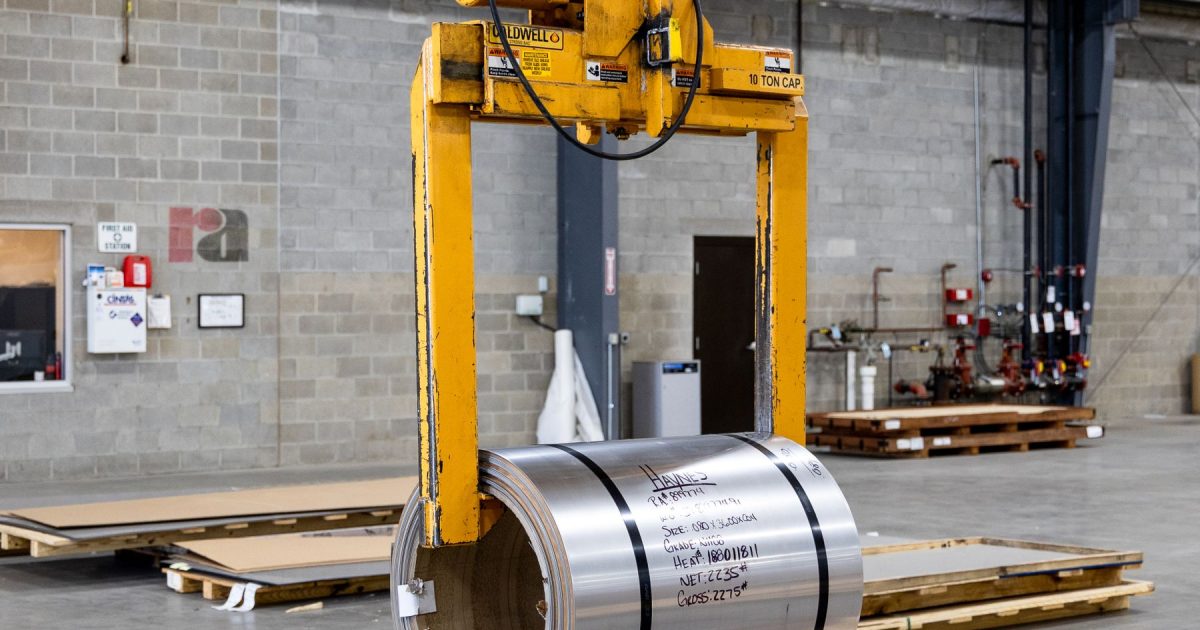
Cover photo by Rolled Alloys on Pexels.