

Steel has a wide range of categories and uses. It is the earliest and most heavily used basic material in modern industry, serving construction, machinery, automobiles, and many other sectors, and it remains a cornerstone of national infrastructure construction. With the rapid development of modern industry, demand for steel products has grown strongly across every field — which has also heated up the steel trade.
According to the China Iron and Steel Industry Association, China produced 1.013 billion tons of crude steel and 1.340 billion tons of finished steel in 2022. Yet steel trading itself remains dominated by large-scale transactions: big batches and high prices are the basic characteristics of the industry, while small enterprises need scattered, small-batch supplies — and they face many procurement difficulties and pain points.
Huang Qian and his partners founded Shanghai Moshu Accessories Industrial Technology Co., Ltd. — “MOOPEC” — to pay attention to precisely these “small” needs in the industry, and in doing so found a big way out for development.
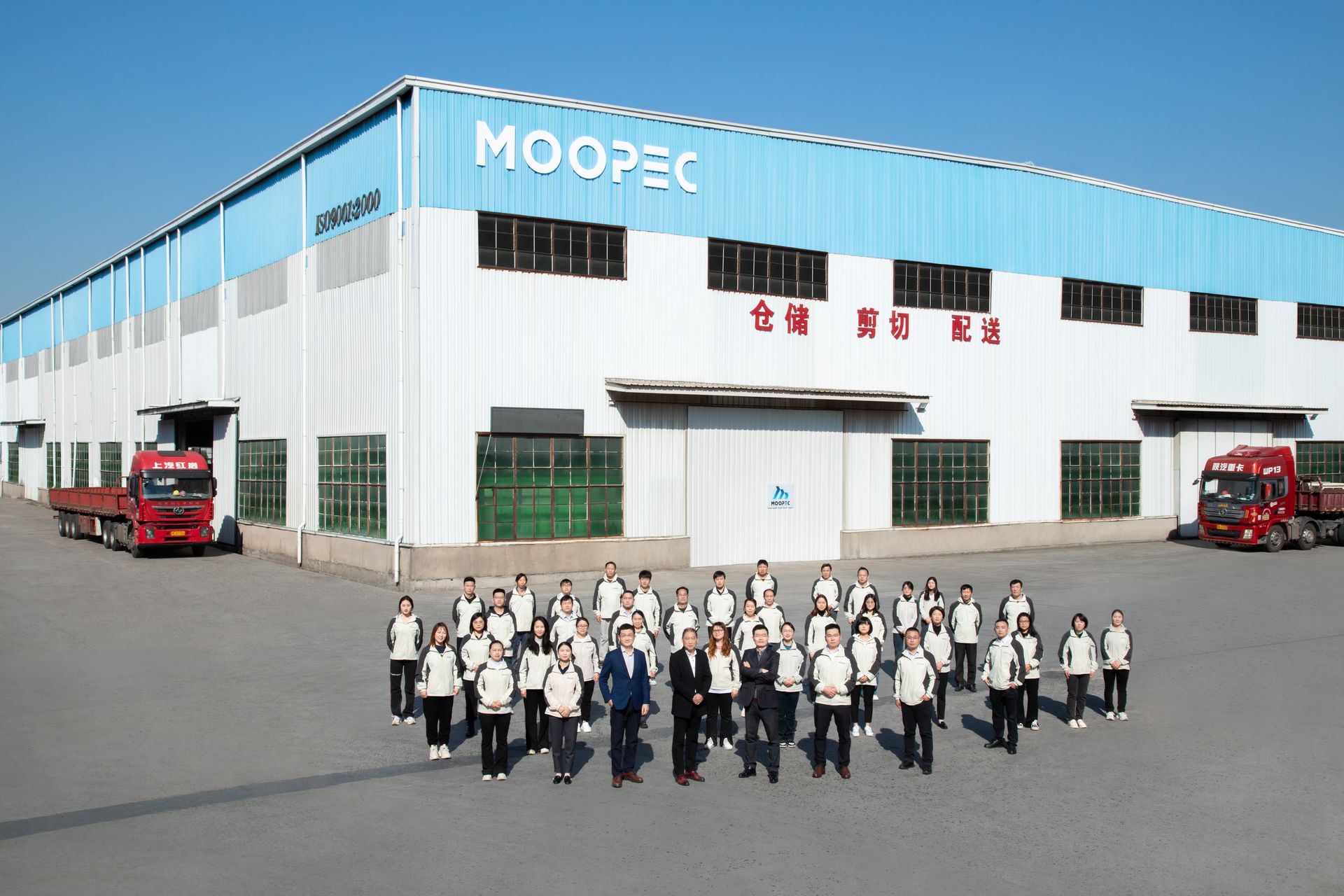 Figure 1: Moopec
Focus on Long-Tail Customers
A “small” positioning
There is a theory in economics called the long-tail effect: the future of business lies not in popular products or the head of the traditional demand curve, but in the infinitely long tail of that curve. “People generally pay attention to the needs of the top, but often forget the long tail. In fact, long-tail customers have many individualized and scattered needs, and together they form a larger market segment.”
Small profits, big market — that is the bet. According to Huang Qian, MOOPEC is committed to providing small-batch B2B steel products, along with integrated services covering product consultation, sales, processing, logistics and after-sales support, helping customers solve the difficulties of purchasing steel in scattered, small batches.
“The accumulation of small markets brings an obvious long-tail effect. Being the small-volume metal material supplier for customers in the industrial field is our positioning for ourselves,” Huang Qian said. Since its establishment in 2018, thanks to this clear positioning and its accurate grasp of industry pain points, the company’s turnover had exceeded 600 million yuan by the end of 2021. After five years of accumulation and practice, its customers now include Fortune Global 500 companies, more than 150 domestic end customers, and more than 500 industry customers.
From e-commerce platform to offline service
There are many difficulties in small-batch steel procurement, so how does MOOPEC solve them? Huang Qian explained that the partners have more than ten years of entrepreneurial experience in the steel field and own downstream processing factories, enabling independent inventory, matching and cutting — and the supply service system was then upgraded to add large-volume wholesale business.
“In layman’s terms, MOOPEC is like a fruit wholesaler. Retail buyers can come to us for fruit without having to communicate directly with the growers, which saves them a great deal of time and cost,” Huang said.
At the beginning of the venture, Huang Qian actually planned to solve the long-tail problem by building an e-commerce information platform, but he soon found that this road was hard to walk. “Because of the particularity of steel, companies are not good at — or unwilling — to purchase online. Only when a strong trust relationship is established between the two sides can the purchase and delivery of steel happen, and such trust and resources are difficult to accumulate.” So he changed his thinking and led the team to start from offline business instead.
Going global
“In our line of business, there are not many people who can really conduct business negotiations with foreign companies, and my experience in foreign companies gives us an advantage here.” While developing the domestic market, Huang Qian therefore began leading a team to look for orders overseas. In November 2019, he spent hundreds of thousands of yuan to take the team to the Stuttgart International Sheet Metal Exhibition in Germany, took a special booth, and won a large order in one fell swoop. In 2022, the team attended the Hannover International Sheet Metal Processing Technology Exhibition in Germany, winning orders while greatly enhancing the brand’s influence.
Trying to Change Roles
Reading a volatile market
Steel prices fluctuate greatly, often in a state of violent swings, and many factors influence them. Beyond supply and demand, prices are restricted by economic, cost and technological conditions, and domestic steel prices are also closely linked to international markets. “To grasp the price trend, we need to constantly follow spot-market price changes for international steel products and the real-time market conditions of steel futures,” Huang said. “At the same time, we must stay aware of current events at home and abroad, because geopolitical conflicts also exacerbate the impact on the steel market.”
Learning to decide alone
Huang Qian said with a smile that his role has changed a lot since he started his business. At first he wanted to make steel from the technical level; finding that infeasible, he turned to trade. Now, with the steel industry chain increasingly financialized, he has “gone financial again — but steel is the carrier.”
“I knew nothing at first; the road was made by walking it.” Facing tests of business adjustment and risk management, the company began participating in the domestic futures market for hedging, initially inviting a professional team to run futures operations. But he soon discovered, “No one can make the decision for you. As an entrepreneur, you need super decisiveness — even if the decision turns out to be wrong.”
After learning that painful lesson, Huang Qian decided to participate and make decisions himself. “I started learning continuously — and that learning includes mentality. When futures skyrocket, you need to remain rational; when facing a sharp drop, you need to overcome fear and show courage. I must have strong comprehensive judgment, which is a great challenge to one’s thinking and vision.”
From certainty to uncertainty
Before starting his business, Huang Qian worked at Accenture, the well-known consulting firm, as a global architect. The work was very busy, “but you were in a state of certainty every day — unlike now, when you face too much uncertainty all the time. The pressure is really great.” Yet it is precisely amid so many uncertainties that Huang Qian has seen more possibilities for himself; in the process of constantly seeing himself clearly, he keeps improving himself.
MOOPEC has continuously iterated and entered a new stage of high-quality development: in early 2021, it completed a joint venture with a New Third Board-listed steel e-commerce company and established Shanghai Jiuzhongjin Supply Chain Management Co., Ltd.; that same year, it set up an offshore company in Singapore and opened branches in Wuhan and Shijiazhuang; in 2022, it began participating in business incubation.
Experience Is Wealth
Physics, computers, and a side job teaching
Huang Qian is a native of Shenyang, Liaoning. He entered Shenyang University in 1997, majoring in physics. “I once wanted to apply for computer science, because I loved playing games in high school, I liked computers very much, I liked reading professional newspapers and magazines, and I could tinker with some technology myself.” But his mother thought continuing his studies would be easier with a physics major, and he finally followed her advice.
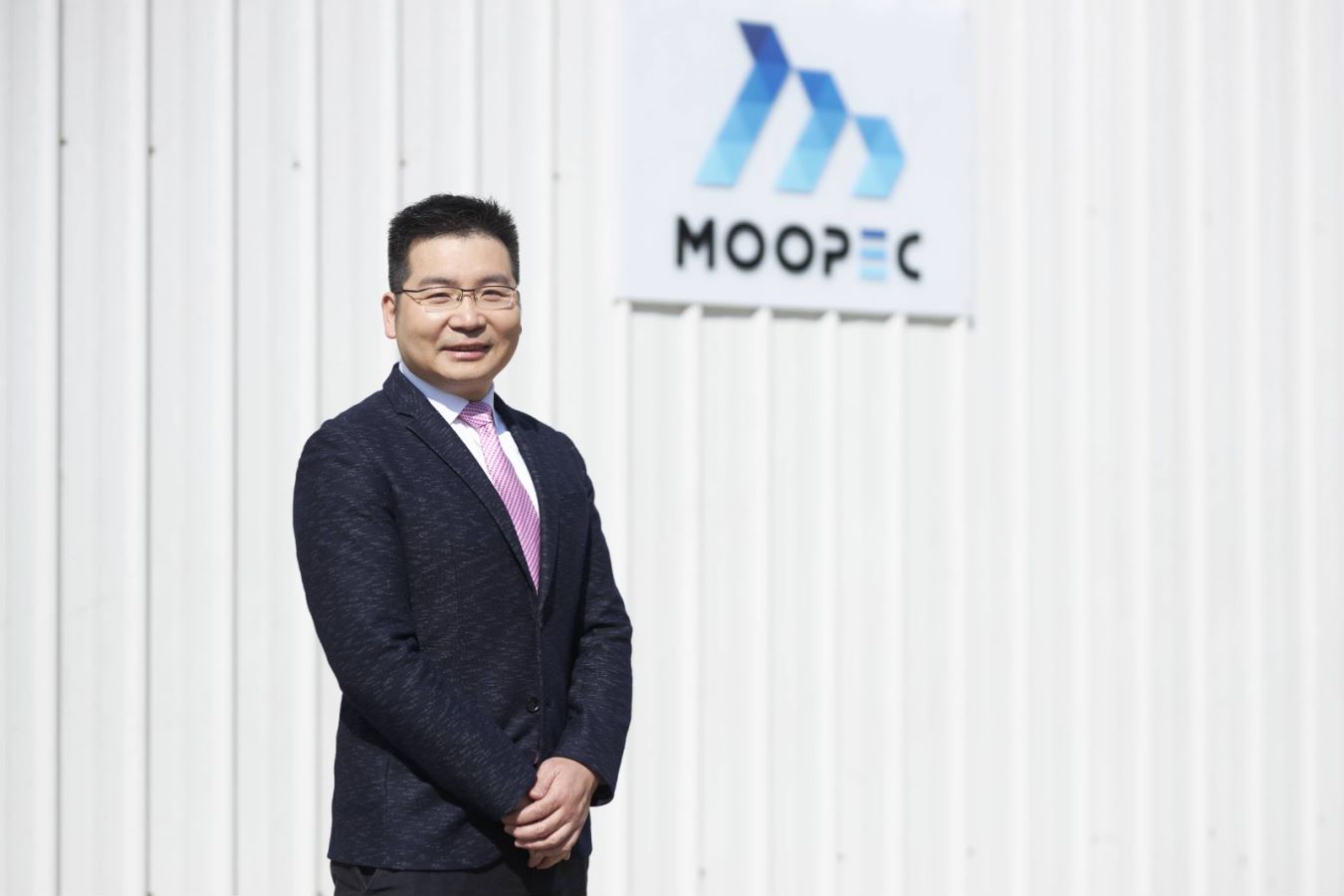 Figure 2:HUANG QIAN
At university he did not give up his hobbies. In the era when the internet still ran over telephone lines, he obtained Microsoft certifications (MCSE, MCDBA) through self-study. “At that time this certificate was very popular, and very few people had passed the exam.” In his junior year, a training institution therefore invited him to lecture. “Passing an exam doesn’t mean you can teach. I had to keep expanding my knowledge, often preparing lessons at night and going to class the next morning to catch up with the schedule.” It was a bit rushed, but such high-intensity teaching exercised his learning and communication skills.
From employee to entrepreneur
After graduating in 2001, Huang Qian came to Shanghai — where his mother was working — to look for a job, joining an information service company and then a consulting company. “Although I worked in the computer field after graduation and have forgotten a lot of professional knowledge, I have to say the physics major was very helpful in training my logical thinking.” These two working experiences in Shanghai greatly cultivated his information-based thinking and English conversation ability; the consulting experience in particular honed his decision-making and communication skills.
After more than ten years of working, to broaden his horizons and improve his standing, he chose in September 2012 to study for an MBA at Antai College of Economics and Management, Shanghai Jiao Tong University. It was during that time he met his current partner. “At first, we went to the United States together as visiting scholars at the Eisenberg School of Management, University of Massachusetts. During that half year, rushing through papers and courses, we built a deep friendship. After returning from the study tour, the idea of starting a business together came up,” Huang recalled.
Three hearts, one direction
In the five years since founding the company, Huang Qian has summed up his entrepreneurial philosophy as “three hearts” — and one constant: try to start from market segments, which often contain new opportunities. Entrepreneurship is also not a one-person job; it requires considering the will of partners, employees and customers, and only by combining their ideas can the business grow bigger and bigger. For the future, Huang Qian is full of confidence.
Expert Reviews
Steel trade is a traditional and huge industry. Based on the vigorous development of China’s steel industry and enormous market demand, business opportunities in steel trading are unlimited, and the steel trade market in Shanghai is especially prosperous. In recent years, the rise of the industrial internet and the application of financial tools have brought both new opportunities and new challenges to the industry — and it is precisely this traditional yet challenging trade that Huang Qian and MOOPEC have cut into.
Huang Qian’s team applied the long-tail theory, starting from long-tail customers and working hard to meet their needs — and so gained a larger market opportunity. Several years of practice show that as a steel trader focusing on long-tail customers, MOOPEC helps small and medium-sized enterprises solve the pain point of “large specifications, small batches” through integrated services of consultation, sales, processing, logistics and after-sales, and uses steel cutting, processing and distribution lines to meet customers’ “last mile” needs, gaining a firm foothold in a fiercely competitive market. Actively using futures instruments to hedge market risks, and leveraging international talent to expand overseas markets for greater profit margins, are the two features that distinguish this team from ordinary domestic steel traders.
Since the second half of 2022, the iron and steel industry has reversed the good trend of previous years, with prices falling all the way — a severe situation that continues. This brings greater challenges to steel trading. I hope Huang Qian and MOOPEC can face the challenge, seize the opportunity within the crisis, and break out their own path. A few suggestions for reference:
1. Build an agile supply chain
Cutting, processing and logistics distribution are core competencies of steel trading enterprises. Learn from excellent traders, continuously strengthen the agile supply chain, and provide personalized, convenient services for SMEs — differentiating from big traders, minimizing direct competition, and expanding market space.
2. Develop high value-added products
Conventional products face fierce competition and thin margins, while products with special customer needs — although small in batch — carry high added value, stable channels and larger profit margins. Look for the blue ocean inside the red ocean.
3. Expand both domestic and international markets
This internationally experienced team already has a foundation in international trade. Give full play to that advantage, respond to the national “Belt and Road” initiative, and increase the expansion of overseas markets.
4. Combine online and offline platforms
Offline space remains huge given the particularity of steel trading, but online platforms cannot be ignored. As platform, supply chain and capital chain construction improve, online channels will only grow more important. Actively use new platforms and technologies to promote the transformation and upgrading of traditional trade.
5. Use futures prudently
Futures instruments are a double-edged sword: used well, they hedge market risk; used poorly, they amplify it. Learn the painful lessons of the bulk commodity trade market, proceed steadily, and aim for long-term success.
(Hu Yi, General Manager of Shanghai Wusongkou Pioneering Park, an incubator under China Baowu; outstanding mentor of the Central Enterprise Star Innovation and Creativity Competition; outstanding innovation and entrepreneurship talent of the Zhangjiang National Independent Innovation Demonstration Zone; winner of the 2020 Hurun Report Technology Transfer Industry Outstanding Contribution Award)



