
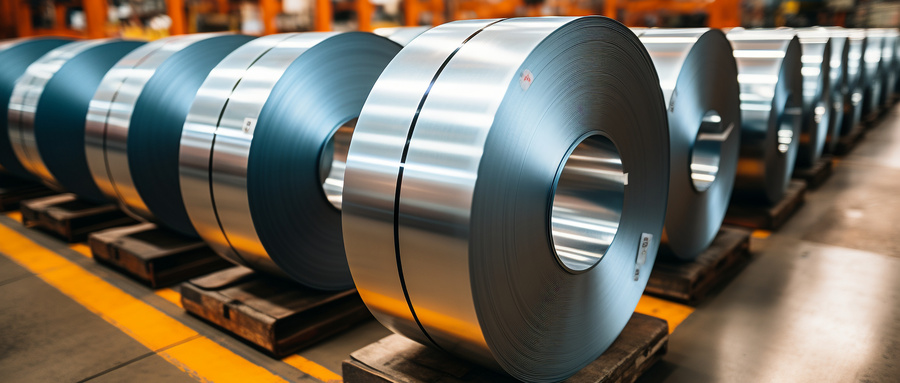
Carbon steel and spring steel are two important materials that receive much attention. Their unique performance characteristics and wide range of applications make them an integral part of industry. Let’s take an in-depth look at the performance characteristics of both steels — and how each is applied in different fields.
Performance Characteristics and Uses of Carbon Steel
Strength and durability
Carbon steel is known for its excellent strength and durability. It withstands high pressures and loads, which makes it suitable for construction, machine building and tool making.
Plasticity and machinability
Although carbon steel has excellent hardness and strength, it still retains good plasticity and machinability. This balance allows it to be molded into various forms to meet the needs of different fields.
Relative corrosion resistance
Carbon steel cannot match the corrosion resistance of stainless steel. However, under the right conditions, it still resists corrosion reasonably well. It therefore suits the manufacture of structures and components where low cost is the priority.
Cost effectiveness
Finally, compared with other alloy steels, carbon steel costs less and is easier to obtain. Consequently, it is widely used in large-scale manufacturing.
In terms of application, carbon steel serves the construction industry, mechanical engineering, automobile manufacturing, furniture manufacturing and many other fields.
Performance Characteristics and Uses of Spring Steel
High elasticity and toughness
Spring steel offers excellent elasticity and toughness, so it can recover after being stressed. This makes it ideal for manufacturing all types of springs.
Wear resistance
In addition, spring steel resists wear extremely well, which suits applications involving high-frequency use and friction.
Fatigue resistance
Spring steel also shows good fatigue resistance. It therefore maintains stable mechanical properties over long periods of service.
Processability
Moreover, spring steel machines well, which makes it suitable for manufacturing many types of springs.
Spring steel is mainly used for spring manufacturing in automobile manufacturing, mechanical engineering, electronic equipment and industrial products.
Mechanical Properties of Standard Spring Steels (DIN)
The table below lists the mechanical properties of the standard grades in different delivery conditions (values apply to strip thicknesses of 0.30–3.00 mm).
| Stahl bezei chnu ng | Stahl bezei chnu ng | weich und | weich und | weich und | weich und | kaltg (+CR) | kaltg (+CR) | vergü (+ | vergü (+ |
| Kurz name | Werk stoff- num ber | Rp0,2 e N/m m2 max. | Rm e N/m m2 max. | A80 e % min. | HVe max. | Rm e N/m m2 max. | HVe max. | Rm e N/mm2 | HVC |
| C55S | 1.1204 | 480 | 600 | 17 | 185 | 1070 | 300 | 1100 bis 1700 | 340 bis 520 |
| C60S | 1.1211 | 495 | 620 | 17 | 195 | 1100 | 305 | 1150 bis 1750 | 345 bis 530 |
| C67S | 1.1231 | 510 | 640 | 16 | 200 | 1140 | 315 | 1200 bis 1900 | 370 bis 580 |
| C75S | 1.1248 | 510 | 640 | 15 | 200 | 1170 | 320 | 1200 bis 1900 | 370 bis 580 |
| C85S | 1.1269 | 535 | 670 | 15 | 210 | 1190 | 325 | 1200 bis 2000 | 370 bis 600 |
| C90S | 1.1217 | 545 | 680 | 14 | 215 | 1200 | 325 | 1200 bis 2100 | 370 bis 600 |
| C100S | 1.1274 | 550 | 690 | 13 | 220 | 1200 | 325 | 1200 bis 2100 | 370 bis 630 |
| C125S | 1.1224 | 600 | 740 | 11 | 230 | 1200 | 325 | 1200 bis 2100 | 370 bis 630 |
| 48Si7 | 1.5021 | 580 | 720 | 13 | 225 | – | – | 1200 bis 1700 | 370 bis 520 |
| 56Si7 | 1.5026 | 600 | 740 | 12 | 230 | – | – | 1200 bis 1700 | 370 bis 520 |
| 51CrV4 | 1.8159 | 550 | 700 | 13 | 220 | – | – | 1200 bis 1800 | 370 bis 550 |
| 80CrV2 | 1.2235 | 580 | 720 | 12 | 225 | – | – | 1200 bis 1800 | 370 bis 550 |
| 75Ni8 | 1.5634 | 540 | 680 | 13 | 210 | – | – | 1200 bis 1800 | 370 bis 550 |
| 125Cr2 | 1.2002 | 590 | 750 | 11 | 235 | – | – | 1300 bis 2100 | 405 bis 630 |
| 102Cr6 | 1.2067 | 590 | 750 | 11 | 235 | – | – | 1300 bis 2100 | 405 bis 630 |
Notes: The buyer may specify either hardness values or tensile strength values — but not both; if nothing is specified, tensile strength applies. For cold-rolled (+CR) products, ranges of 150 N/mm² or 50 HV apply (e.g., 850–1000 N/mm² or 240–290 HV); the same ranges apply to quenched-and-tempered (+QT) products (e.g., 1350–1500 N/mm² or 450–500 HV). Rp0.2 = 0.2% proof strength; Rm = tensile strength; A80 = fracture elongation at an initial gauge length of 80 mm; HV = Vickers hardness.
Heat Treatment Parameters for Hardening
Besides delivery condition, proper heat treatment determines the final performance of spring steel. The table below shows the austenitizing temperatures, quenching media and minimum as-quenched hardness for each grade.
| Stahlbezeic hnung | Stahlbezeic hnung | Austenitisie rungs_x005 f_x005f_x0 05ftemper atur oC | Abkühlmed ium | Mindestwe im gehärteten Zustand ohne Anlassen | Mindestwerte der Härtea im gehärteten Zustand ohne Anlassen |
| Kurzname | Werkstoff-number | Austenitisie rungs_x005 f_x005f_x0 05ftemper atur oC | Abkühlmed ium | HRCb | HVb |
| C55S | 1.1204 | 830 bis 860 | Öl | 55 | 600 |
| C60S | 1.1211 | 825 bis 855 | Öl | 57 | 640 |
| C67S | 1.1231 | 815 bis 845 | Öl | 59 | 670 |
| C75S | 1.1248 | 810 bis 840 | Öl | 60 | 700 |
| C85S | 1.1269 | 800 bis 830 | Öl | 61 | 720 |
| C90S | 1.1217 | 790 bis 820 | Öl | 61 | 720 |
| C100S | 1.1274 | 790 bis 820 | Öl | 61 | 720 |
| C125S | 1.1224 | 780 bis 810 | Öl | 62 | 750 |
| C48Si7 | 1.5021 | 840 bis 870 | Wasser | 52 | 540 |
| 56Si7 | 1.5026 | 840 bis 870 | Öl | 55 | 600 |
| 51CrV4 | 1.8159 | 840 bis 870 | Öl | 57 | 640 |
| 80CrV2 | 1.2235 | 840 bis 870 | Öl | 60 | 700 |
| 75Ni8 | 1.5634 | 820 bis 850 | Öl | 60 | 700 |
| 125Cr2 | 1.2002 | 820 bis 850 | Öl | 62 | 750 |
| 102Cr6 | 1.2067 | 820 bis 850 | Öl | 61 | 720 |
Notes: These minimum values apply to a thickness range of 0.30–3.00 mm. HRC = Rockwell hardness scale C; HV = Vickers hardness.
Conclusion
Carbon steel and spring steel each have unique performance characteristics and play important roles in different fields. Carbon steel wins broad adoption across many industries thanks to its strength, durability and machinability. In contrast, spring steel dominates spring manufacturing thanks to its high elasticity, wear resistance and fatigue resistance. Together, their wide range of applications offers a wealth of options and possibilities for industry.



