Cold Rolled Steel
Cold-rolled steel sheet is a metal sheet that is cold-rolled to hot-rolled billets at room temperature to improve surface quality,dimensional accuracy and mechanical properties. It is commonly used in automobiles,home appliances and construction.
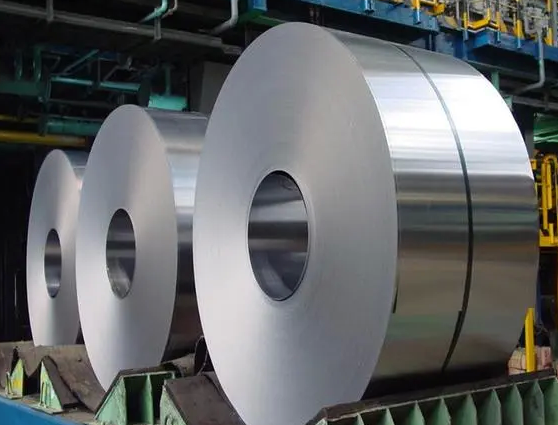
High Strength Low Alloy Cold Rolled Steel DC01-DC07
Cold-rolled stamped steel is commonly used to make parts for automobiles, home appliances, and other industrial applications. The properties of cold-rolled stamped steel make it an ideal choice for these applications.
| Grade | YS Strength (MPa) | Tensile Strength (MPa) Not less than | Elongation A80mm % Not less than | r90° | n90° | |||||
| Nominal thickness | Not less than | |||||||||
| <0.30 | 0.30~<0.50 | 0.50~<0.70 | 0.70~<1.0 | 1.0~<1.6 | ≥1.6 | |||||
| DC01d | 140~280 | 270 | 24 | 26 | 28 | 30 | 32 | 34 | – | – |
| DC03 | 140~240 | 270 | – | 30 | 32 | 34 | 35 | 36 | 1.3 | – |
| DC04 | 130~210 | 270 | – | 34 | 36 | 38 | 39 | 40 | 1.6 | 0.18 |
| DC05 | 120~180 | 270 | – | 35 | 38 | 40 | 40 | 41 | 1.9 | 0.20 |
| DC06 | 110~170 | 260 | – | 37 | 39 | 41 | 42 | 43 | 2.1 | 0.22 |
| DC07 | 100~150 | 250 | – | 40 | 42 | 44 | 44 | 44 | 2.5 | 0.23 |
a. When there is no significant yield, RP0.2 should be used; otherwise ReL should be used. When the thickness is more than 0.50mm and not more than 0.70mm, the specified value of the yield strength is allowed to increase 20MPa; when the thickness is not more than 0.50mm, the specified value of the yield strength is allowed to increase 40MPa.
b. The sample is the P6 sample in GB/T 228 and the sample direction is transverse.
c. The requirements of r90 and n90 values apply only to products with the thickness not less than 0.50mm. When the thickness is more than 2.0mm, the value of r90 is allowed to lower 0.2.
d. The upper limit value of DC01 yield strength applies only to products within 8 days since the manufacturing date.
| Grade | Chemical Component % | ||||
| C | Mn | P | S | Ti | |
| DC01a | ≤0.10 | ≤0.60 | ≤0.045 | ≤0.045 | – |
| DC03a | ≤0.08 | ≤0.45 | ≤0.035 | ≤0.035 | – |
| DC04a | ≤0.08 | ≤0.40 | ≤0.030 | ≤0.030 | – |
| DC05 | ≤0.008 | ≤0.30 | ≤0.020 | ≤0.020 | ≤0.20b |
| DC06 | ≤0.006 | ≤0.30 | ≤0.020 | ≤0.020 | ≤0.20b |
| DC07 | ≤0.006 | ≤0.25 | ≤0.020 | ≤0.020 | ≤0.20b |
a. Nb and/or Ti are allowed to be added.
b. Nb is allowed to replace part of Ti, in which case the total content of Nb and Ti should not exceed 0.20%.