Aluminium Alloy
Aluminum alloy is a material composed of aluminum and other metal elements
with light weight, high strength characteristics, widely used in industrial and manufacturing fields.
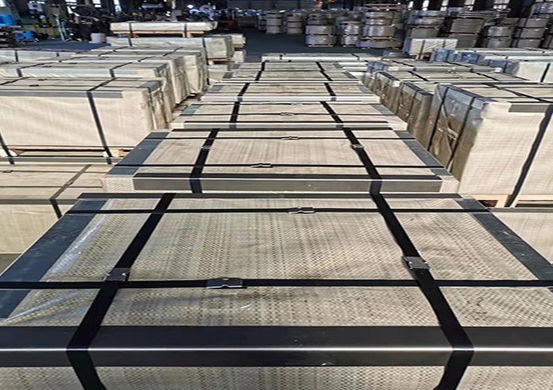
BMW GS93033
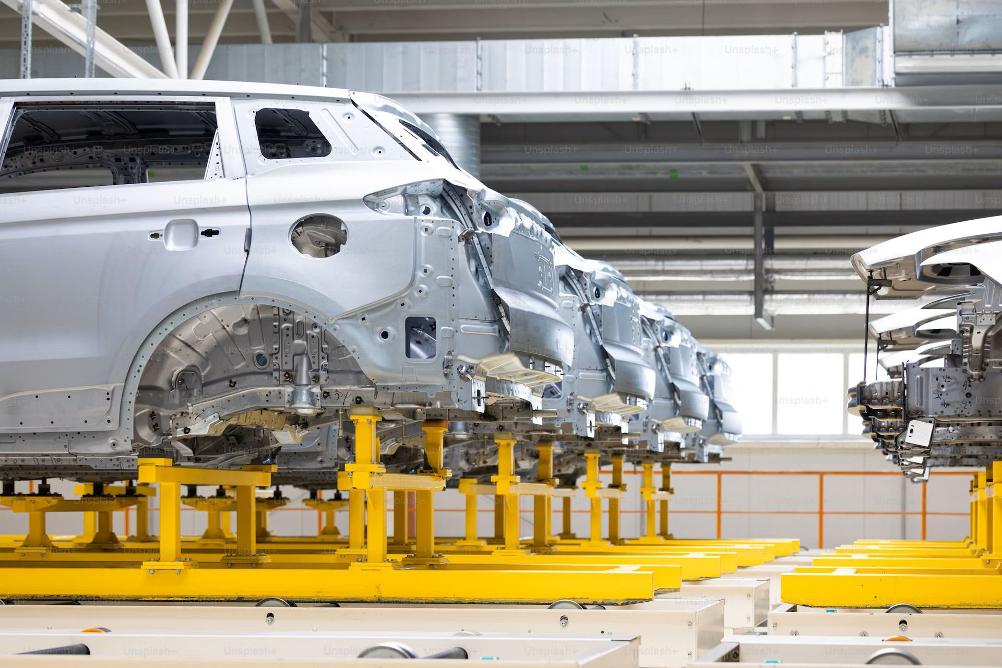
With the continuous development of the automobile industry, aluminum is widely used in automobile manufacturing as a lightweight, high-strength and corrosion-resistant material. The application of aluminum in automobiles can not only reduce the body weight, improve fuel efficiency, but also increase the safety performance and ride comfort of the vehicle.
Material: AL5 / AL6
Type: Coil; Sheet; Plate
Width: Customers’ Requirement
Thickness: 0.5~4.0mm
Temper: O/H111, T4, T6, T61, T64
Certification: ISO9001, SGS, RoHS
Application: Mold Test/Manufacture for aluminium coil, sheet, chassis, sheet material, body, alloy, blank, material
For the national standards quoted in the subject standard, the following table refers to the corresponding international standards:
| Grade | Condition | Thickness mm |
Tensile strength MPa |
Yield point MPa |
Elongation at break A80mm % |
Elongation Ag% |
Vertical anisotropy r10% |
Hardening exponent 5% |
Yield point Rm |
|---|---|---|---|---|---|---|---|---|---|
| AL5– IIC 1) | O/H111 | 050 to 400 | ≥200 | 85 to 130 | ≥20 | ≥18 | ≥0,55 | ≥0,26 | __ |
| AL5– IIC 1) | O/H111 | 400 to 900 | ≥200 | 90 to 130 | ≥19 | ≥16 | ≥0,55 | ≥0,25 | __ |
| AL5–STD 2) | O/H111 | 050 to 400 | ≥255 | 110 to 160 | ≥23 | ≥20 | ≥0,60 | ≥0,26 | ≤0,60 |
| AL5–STO 2) | O/H111 | 050 to 400 | ≥255 | 110 to 160 | ≥24 | ≥21 | ≥0,60 | ≥0,30 | ≤0,60 |
| AL5– HYB 2) | O/H111 | 140 to 160 | ≥250 | 105 to 150 | ≥26 | ≥23 | ≥0,60 | ≥0,28 | ≤0,55 |
1) This alloy is resistant to intercrystalline corrosion.
In case of doubt the resistance shall be proven as described in section 7.4.
2) This alloy is susceptible to intercrystalline corrosion (see section 7.4).
| Grade | Layers | Si | Fe | Cu | Mn | Mg | Cr | Zn | Ti | Al |
|---|---|---|---|---|---|---|---|---|---|---|
| AL5– IIC 1) | ≤0,40 | ≤ 0,40 | ≤0,10 | ≤0,55 | 2,6 to 3,2 | ≤0,30 | ≤0,20 | ≤0,15 | Rest Remain |
|
| AL5–STD 2) | ≤0,20 | ≤ 0,35 | ≤0,15 | 0,20 to 0,50 | 4,0 to 5,0 | ≤0,10 | ≤0,25 | ≤0,10 | Rest Remain |
|
| AL5–STO 2) | ≤0,20 | ≤ 0,35 | ≤0,15 | ≤0,50 | 4,0 to 5,0 | ≤0,10 | ≤0,25 | ≤0,10 | Rest Remain |
|
| AL5– HYB 2) | Core 3) AlMg 5,3 | ≤0,30 | ≤ 0,35 | ≤0,15 | ≤0,50 | 5,00 to 5,50 | ≤0,10 | ≤0,25 | ≤0,15 | Rest Remain |
| AL5– HYB 2) | Clad layer 4) AlMg1 | ≤0,30 | ≤ 0,50 | ≤0,20 | ≤0,20 | 0,70 to 1,10 | ≤0,10 | ≤0,25 | ≤0,15 | Rest Remain |
1) This alloy is resistant to intercrystalline corrosion.
In case of doubt the resistance must be proven as described in section 7.4.
2) This alloy is susceptible to intercrystalline corrosion (see section 7.4).
3) Thickness of the core: 80% to 90% of the nominal thickness.
4) Thickness of the clad layer per side: 5% to 10% of the nominal thickness.