Cold Rolled Steel
Cold-rolled steel sheet is a metal sheet that is cold-rolled to hot-rolled billets at room temperature to improve surface quality,dimensional accuracy and mechanical properties. It is commonly used in automobiles,home appliances and construction.
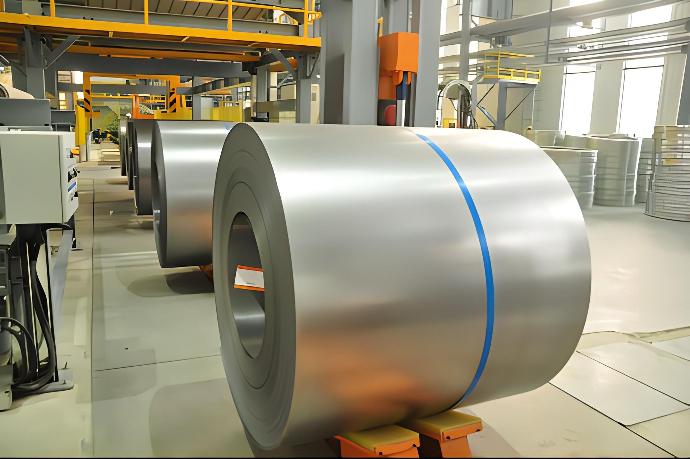
High Strength Low Alloy Cold Rolled Steel HC340/460HS-HC1200/1800HS
Hot forming steel plate is formed after 950°C high temperature heating, rapid cooling so as to comprehensively improve the strength of steel plate, yield rate up to 1000Mpa, per square centimeter can withstand more than 10 tons of pressure, the use of this material in the car body, almost no big change in the weight of the body, the bearing capacity increased by 30%. The European NCAP crash test achieved five-star standards.
| Grade | Chemical Component % | ||||||||||
| C | Si | Mn | P | S | Alt | B | N | Cr | Ti | Mo | |
| HC340/460HS | ≤0.12 | ≤0.5 | ≤1.5 | ≤0.025 | ≤0.01 | 0.01~0.06 | – | ≤0.008 | – | ≤0.05 | – |
| HC370/550HS | ≤0.12 | ≤0.5 | ≤2.0 | ≤0.025 | ≤0.01 | 0.01~0.06 | – | ≤0.008 | ≤0.30 | ≤0.08 | – |
| HC800/1000HS | ≤0.15 | ≤0.8 | ≤2.0 | ≤0.025 | ≤0.01 | 0.01~0.06 | ≤0.0050 | ≤0.008 | ≤0.35 | ≤0.08 | ≤0.30 |
|
HC950/1300HS (B1500HS) |
0.20~0.25 | ≤0.4 | 1.0~1.4 | ≤0.025 | ≤0.01 | 0.01~0.06 | ≤0.0050 | ≤0.008 | ≤0.35 | 0.02~0.05 | ≤0.35 |
| HC1100/1700HS | 0.28~0.35 | ≤0.5 | 1.0~1.8 | ≤0.025 | ≤0.01 | 0.01~0.06 | ≤0.0050 | ≤0.008 | ≤0.35 | ≤0.05 | ≤0.35 |
| HC1200/1800HS | 0.30~0.38 | ≤0.5 | 1.0~2.0 | ≤0.025 | ≤0.01 | 0.01~0.06 | ≤0.0050 | ≤0.008 | ≤0.35 | ≤0.05 | ≤0.35 |
a. Microalloying elements such as Nb can be added.
| Grade |
YS Strength (MPa) |
Tensile Strength (MPa) |
Elongation A50mm % |
| HC340/460HS | ≥320 | ≥400 | ≥23 |
| HC370/550HS | ≥340 | ≥450 | ≥15 |
| HC800/1000HS | ≥300 | ≥500 | ≥15 |
|
HC950/1300HS (B1500HS) |
≥280 | ≥450 | ≥20 |
| HC1100/1700HS | ≥300 | ≥500 | ≥16 |
| HC1200/1800HS | ≥300 | ≥500 | ≥15 |
a. When the yield phenomenon is not obvious, Rp0.2 is used; otherwise, ReL is used.
b. The sample is P17 as specified in GB/T 228.1, and the direction of the sample is transverse.
| Grade | Tensile Testa,b,c | Hardnessd |
VDA (1.4mm) |
|||
|
YS Strength (MPa) |
Tensile Strength (MPa) |
Elongation % A50mm | HV10 | HRC | ||
| HC340/460HS | 340~460 | 460~600 | ≥15 | ≥150 | – | ≥105 |
| HC370/550HS | 370~550 | 550~750 | ≥13 | ≥170 | – | ≥95 |
| HC800/1000HS | 800~1100 | 1000~1300 | ≥6 | ≥300 | ≥30 | ≥75 |
|
HC950/1300HS (B1500HS) |
950~1250 | 1300~1700 | ≥5 | ≥400 | ≥40 | ≥45 |
| HC1100/1700HS | 1100~1400 | 1700~2000 | ≥5 | ≥500 | ≥49 | ≥40e |
| HC1200/1800HS | 1200~1500 | 1800~2150 | ≥5 | ≥520 | ≥50 | ≥40e |
a. When the yield phenomenon is not obvious, Rp0.2 is used; otherwise, ReL is used.
b. The sample is P17 as specified in GB/T 228.1.
c. When the thickness of c sample is less than 1.2mm, the elongation after fracture can be reduced by 1%.
d. When standard tensile specimens cannot be obtained from the part, the microhardness of the part core HV10 or the surface macrohardness HRC can be used, but for materials with thickness less than 0.8mm the material is not suitable for HRC testing.
e. Cold bending Angle detection should be carried out after the parts or samples are baked (170℃, 20 minutes).